Your face gets a mirror check every morning. Your scalp usually gets nothing – maybe a quick scratch, maybe a ponytail that stays in for three days. And yet the scalp is skin. It has a barrier, oil glands, and its own very particular needs, and it changes with the seasons, your stress levels, your workout schedule, and whatever you put on your hair. Scalp analysis is simply the habit of looking at it, noticing what shifts, and adjusting your routine from there. Done at home, it takes about ten minutes, and it is one of the most quietly useful beauty habits you can build.
Here is how to do a scalp analysis at home, how to track before-and-after photos in a way that actually shows something, and how to turn what you see into a scalp care routine that feels good enough to keep.
Why Scalp Analysis Deserves a Place in Your Routine
Most of us make hair decisions based on the last two inches of our hair – the part we can see in the mirror. The scalp sits underneath, doing the quiet work: producing oil, shedding dead skin cells, holding product residue, and reacting to heat tools, tight styles, dry air, and long stretches between washes.
Without a baseline, it is easy to misread what is happening up there. You might assume your scalp is oily when it is actually dehydrated and overproducing oil to compensate. You might assume it is dry when the real issue is buildup from dry shampoo and leave-in products. A little observation replaces guessing with something closer to knowledge.
A scalp analysis also gives you something most beauty routines lack: a record. When you check in every couple of weeks and take the same photos, you start to see patterns instead of one-off moments. That is where the real value lives.
- Oil balance at the roots, and whether it changes across the week
- Visible product residue or film near the part line
- Areas that feel tight, tender, or sensitive when you press gently
- Flaking or dry patches that come and go
- How your part line and hairline look in photos over a few months
None of this is about diagnosing anything. It is about knowing your own normal, so you can notice when something drifts away from it.
Shop the scalp ritual
-
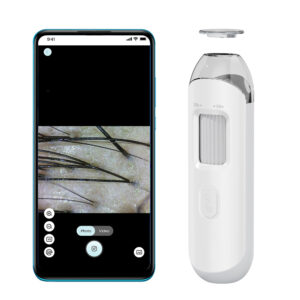
Rootli Scope AI-Connected Scalp & Follicle Analyzer
Price range: $158.00 through $178.00 Select options This product has multiple variants. The options may be chosen on the product page -
How to Do an At-Home Scalp Analysis in Ten Minutes
You do not need a clinic or a specialist to start. You need decent light, clean hands, and a willingness to look closely at a part of your body you usually ignore.
Start with hair that is clean and mostly dry
Freshly washed hair gives you the clearest read, because product and oil are not clouding the picture. Let it air dry or rough dry it – damp roots are harder to see through. If you wash every three days, do your check on wash day so the conditions stay consistent.
Work in sections with real light
Natural daylight is your best friend here. Sit near a window, or stand under bright, even bathroom light. Use a comb or your fingers to part your hair in a few places: down the middle, a couple of inches to each side, along the hairline, and at the crown. Lift the hair rather than pressing it flat so you can see the scalp itself, not just the hair covering it.
Notice, describe, and write it down
Instead of labeling something as a problem, describe it plainly: roots looked shiny by midday, a small dry patch above the left temple, scalp felt tight after washing. A notes app is plenty. The goal is a short, honest log you can compare against next time.
If you want more detail than fingertips and a phone camera can give, two tools make the job noticeably easier. The Rootli Scope AI-Connected Scalp & Follicle Analyzer connects to your phone so you can capture close-up images of the scalp and hairline and keep them in one place, which makes side-by-side comparison far more useful than squinting in the mirror. And if you would rather be guided through a routine from the beginning, The Rootli Diagnostic Pro is designed around understanding the scalp before you choose which ritual to follow.
Before-and-After Tracking: Photos, Timing, and What to Compare
Before-and-after photos are only as good as their consistency. Two photos taken in different rooms, at different times of day, with different lighting, will tell you almost nothing. Set yourself up so the comparison is fair.
Take a four-photo baseline
Once, at the very start, capture four angles in the same sitting:
- Hairline and forehead, hair pulled back
- Center part, from front to crown
- Crown, shot from slightly above
- Temple or side part, whichever area you think about most
Save them in one album on your phone and name it something obvious. That album becomes your reference point for everything that follows.
Keep the variables boring on purpose
Same window, same time of day, same hair state (freshly washed and dried), same phone distance. If you can, have someone help with the crown shot, or prop your phone up and use the timer. Steady lighting matters more than a perfect angle – shadows can make a healthy scalp look patchy and a patchy one look fine.
Check in every two to four weeks, and review quarterly
A quick scalp analysis every couple of weeks keeps you connected to what is changing. But when you are evaluating whether a new ritual is working for you, give it a real window – eight to twelve weeks is a reasonable stretch before you compare photos side by side. Hair and scalp routines move slowly, and checking daily is a fast track to frustration. Look at the album monthly, study it seasonally.
Matching Your Scalp Care Routine to What You Find
This is the part where the tracking pays off. Once you know how your scalp tends to behave, you can build a routine around it instead of buying whatever is trending. A few common patterns and the direction they usually point:
- Roots get shiny fast, scalp feels congested: focus on cleansing thoroughly and using fewer leave-in products. A gentle clarifying wash once a week often helps more than adding anything new.
- Scalp feels tight or dry after washing: lean into gentle, hydrating steps and slower massage. Lightweight serum applied to the scalp, not just the ends, fits here.
- Scalp feels generally fine but you want a ritual: this is the fun category. Massage, warmth, and light-based tools give you something to look forward to rather than something to fix.
- Sensitivity or tenderness when you press: go gentler, not harder. Skip aggressive scrubbing and hot water, and keep your routine simple until things settle.
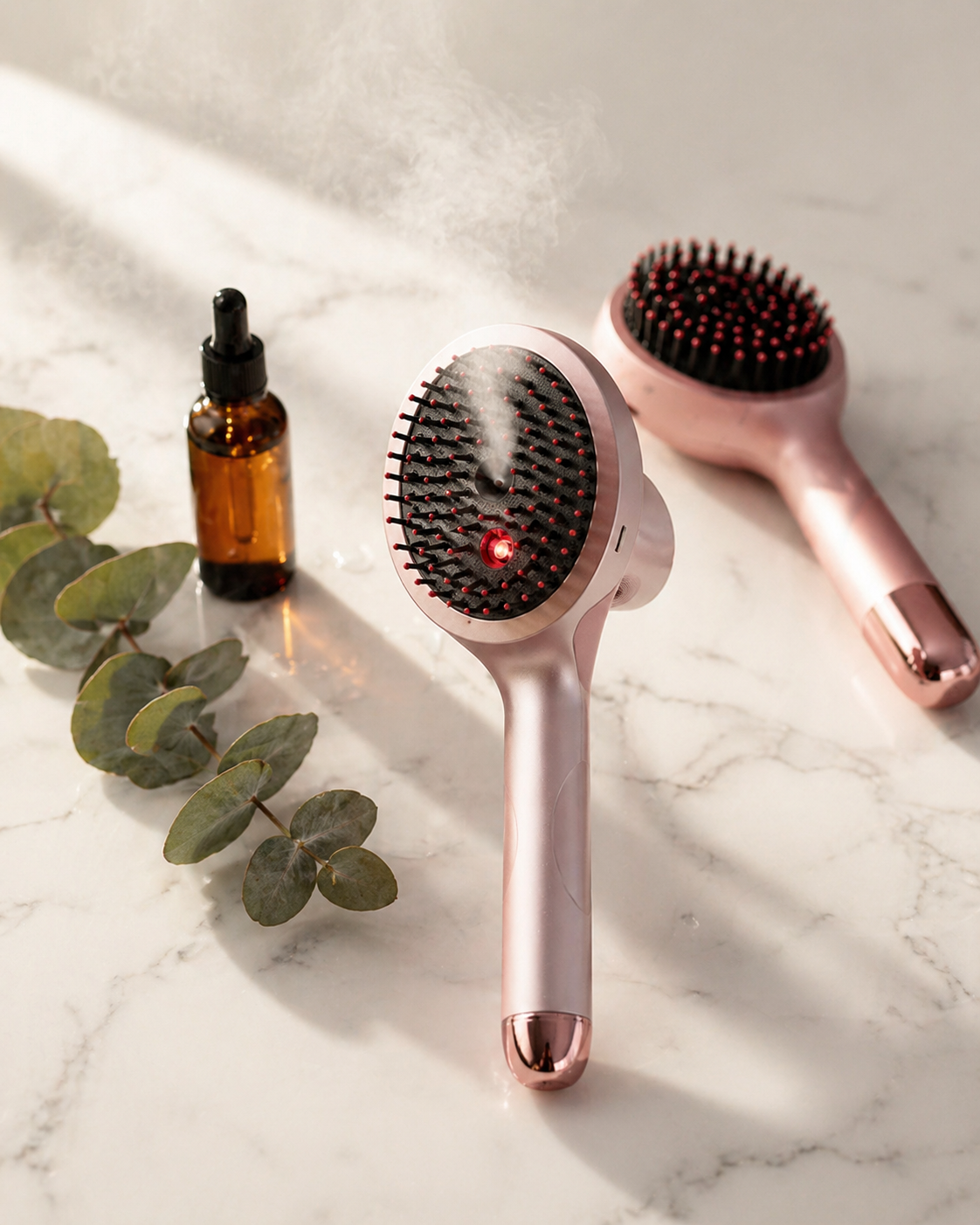
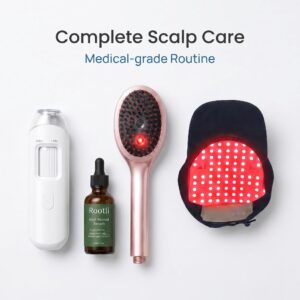
For serum-led care, Rootli Serum is a lightweight daily option, and the Rootli Serum Comb Serum-Infusing Scalp Massage Brush helps you distribute it evenly through the scalp while you massage – which is exactly the kind of two-in-one step that makes a routine stick. If massage is the part you enjoy most, the Rootli Stone Comb – Scalp Gua Sha turns five minutes of slow strokes into a genuine pre-serum ritual.
If you are drawn to light-based scalp wellness, the Rootli Pulse Pro – LED Light Cap offers hands-free red and blue light sessions you can wear while you answer emails, while the Rootli Glow Comb Dual-Light Scalp Brush folds dual-light brushing into daily scalp care. And if you would rather start with a guided, everything-in-one-place approach, The Glow Detection Set is built around checking scalp condition and building a more intentional routine from there.
Progress You Can Feel, Not Just See
Photos are useful, but they are not the whole story. Some of the earliest signs that your scalp care routine is working are sensory. The scalp feels comfortable rather than tight. Your roots feel clean for longer. Massage feels pleasant instead of tender. Styles sit better because your hair is not fighting a scalp that feels irritated or weighed down.
Write those things down too. Next to your photos, note how your scalp felt that week. Over a few months, that log becomes a far more honest record than any single image – and it helps you notice when a routine has quietly stopped serving you.
Your First Scalp Check-In Starts This Week
You do not need a full shelf of tools to begin. Pick one evening this week, wash your hair, find good light, and take your four baseline photos. Write three sentences about what you notice. That is a complete scalp analysis, and it is enough to start.
If you would like a little more clarity and a ritual to grow into, begin with the Rootli Scope AI-Connected Scalp & Follicle Analyzer or The Rootli Diagnostic Pro and let what you see shape what you do next. The scalp deserves the same attention as the face – and the best time to look is now.