Most of us have a clear picture of our skin’s habits: the oily T-zone, the dry patches, the way it reacts when we travel. Our scalp, somehow, never got the same attention. Yet it is skin too, and it is the foundation of every hair look you will ever style. That is where scalp analysis at home comes in. It is not a medical exam and it is not a diagnosis. It is an observational practice that helps you understand what your scalp seems to need right now, so your routine can respond to reality instead of guesswork.
This guide walks through how to do a simple scalp analysis at home, how to track before-and-after changes in a way that is genuinely honest, and how to translate what you notice into a gentle routine that fits your life. Think of it as getting to know your scalp the way you already know your skin.
Why Scalp Analysis Deserves a Spot in Your Beauty Routine
You probably already adjust your skincare based on what you see in the mirror: a little more hydration when your cheeks feel tight, a gentler cleanse after a sweaty workout. Your scalp responds to the same forces, from weather and stress to product buildup, hot tools, and hats. The difference is that it is harder to see, which is why so many of us default to one shampoo and hope for the best.
Scalp analysis simply closes that information gap. When you know whether your scalp tends to feel oily at the roots, tight and dry, sensitive, or congested with product, you can choose tools and formulas that make the whole experience more comfortable. A balanced-feeling scalp is a nicer place to start any hair routine, and a routine that feels good is one you will actually keep.
What at-home scalp analysis can and cannot do
What it can do: help you notice patterns, track how your scalp looks and feels over weeks, see whether a product seems to be helping, and choose your next step with more intention. What it cannot do: diagnose a condition or tell you why something is happening. If you are noticing persistent irritation, pain, sudden changes, or hair loss, that is a conversation for a dermatologist or physician, not a mirror and not a blog post.
Shop the scalp ritual
-
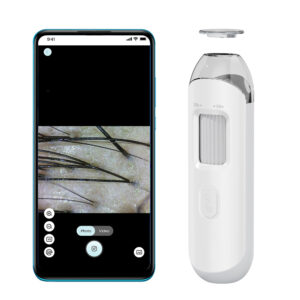
Rootli Scope AI-Connected Scalp & Follicle Analyzer
Price range: $158.00 through $178.00 Select options This product has multiple variants. The options may be chosen on the product page
How to Run a Simple Scalp Analysis at Home
A baseline is just a snapshot you take before you change anything, so that future comparisons mean something. Set aside ten minutes, ideally on a day you have not just washed your hair. Day two or three after a wash tends to be more informative than freshly cleansed.
- Find good light. Natural daylight near a window beats a bathroom bulb every time. If you want more detail, a handheld mirror plus your phone camera works well.
- Part your hair in a few places: down the center, a couple of inches to each side, and along the hairline. Look at the scalp itself, not only the hair.
- Notice the basics. Does the surface look shiny, matte, or flaky? Is there any redness or tenderness when you touch it?
- Pay attention to sensation, not just appearance. Does your scalp feel tight, itchy, comfortable, or slightly tingly after a workout?
- Check the hairline and nape, where product and tension tend to accumulate.
- Write it down. A note in your phone with the date is enough, something like: day two, roots look shiny by evening, slight itch at the crown.
If you want more visibility than your eyes alone can offer, a tool like the Rootli Scope AI-Connected Scalp & Follicle Analyzer gives you a closer look at the scalp surface and follicle area, so you can compare images over time instead of relying on memory. Used as an observation aid, it turns the process into a ritual rather than a guessing game.
Do this before you buy anything
The most useful baseline happens before you add new products. That way, when something changes, you have a genuine before to look back on. It also stops you from buying three new things at once and having no idea which one your scalp actually liked.
Before-and-After Tracking: What to Capture and How Often
Before-and-after tracking gets a bad reputation because it is usually done badly, with different lighting, different angles, and different times of day. Done well, it is one of the most useful habits in scalp care, because it replaces vague impressions with something you can actually look at.
Make your photos comparable
- Same spot, same light. Pick one window and one time of day, and stick to it.
- Same hair state. If your first photo is day-two hair, your next one should be too.
- Same parts. Center part, left part, right part, hairline. Four photos, every time.
- No filters and no zoom tricks. Just a clean, honest image.
- Label the date. Your camera roll does this for you, but a quick note keeps it searchable.
How often to check in
Weekly is plenty for a photo check, and monthly is enough for a real comparison. Scalp and hair changes move slowly, and looking every single day tends to create anxiety rather than insight. A good rhythm looks like this: a quick visual scan once a week, a photo set once a month, and a full written note every four to six weeks.
Pair the check-in with something you already do, like a Sunday evening reset, a face mask, or a long bath. If you are using tools such as the Rootli Diagnostic Pro, the check-in becomes part of the ritual instead of one more task on a list.
Reading What You See Without Overreading It
Here is the honest part: most of what you observe at home is descriptive, not diagnostic. That is completely fine. Descriptions are enough to guide a routine, and they are far more useful than a vague feeling that something is off.
- Shiny, quickly oily roots by evening: your scalp may simply lean oilier, or your cleansing routine may be leaving residue behind. A thorough but gentle cleanse and lighter leave-in products can help it feel more balanced.
- A tight, dry-feeling scalp with visible flaking: often dryness or product buildup. Hydration, less frequent hot-water rinsing, and a serum-led step can make it feel more comfortable.
- Sensitivity, tingling, or tenderness: simplify. Fragrance-heavy products, aggressive scrubbing, and tight hairstyles are common culprits.
- Buildup along the hairline and part: usually styling product, dry shampoo, or conditioner that never quite rinsed out. A scalp-focused cleanse and a massaging tool help here.
- Changes in density along the part: density shifts for many reasons, including stress, hormones, and time. Notice it, track it, and if it is changing quickly or worrying you, bring your photos to a professional.
Notice the pattern: none of these are conclusions. They are starting points for adjusting how your scalp feels day to day, so it can feel comfortable, balanced, and cared for.
Matching Tools and Rituals to What You Notice
Once you have a rough sense of your scalp’s tendencies, choosing products becomes far less random. Here is how to think about it.
If your scalp feels congested or you want deeper cleansing
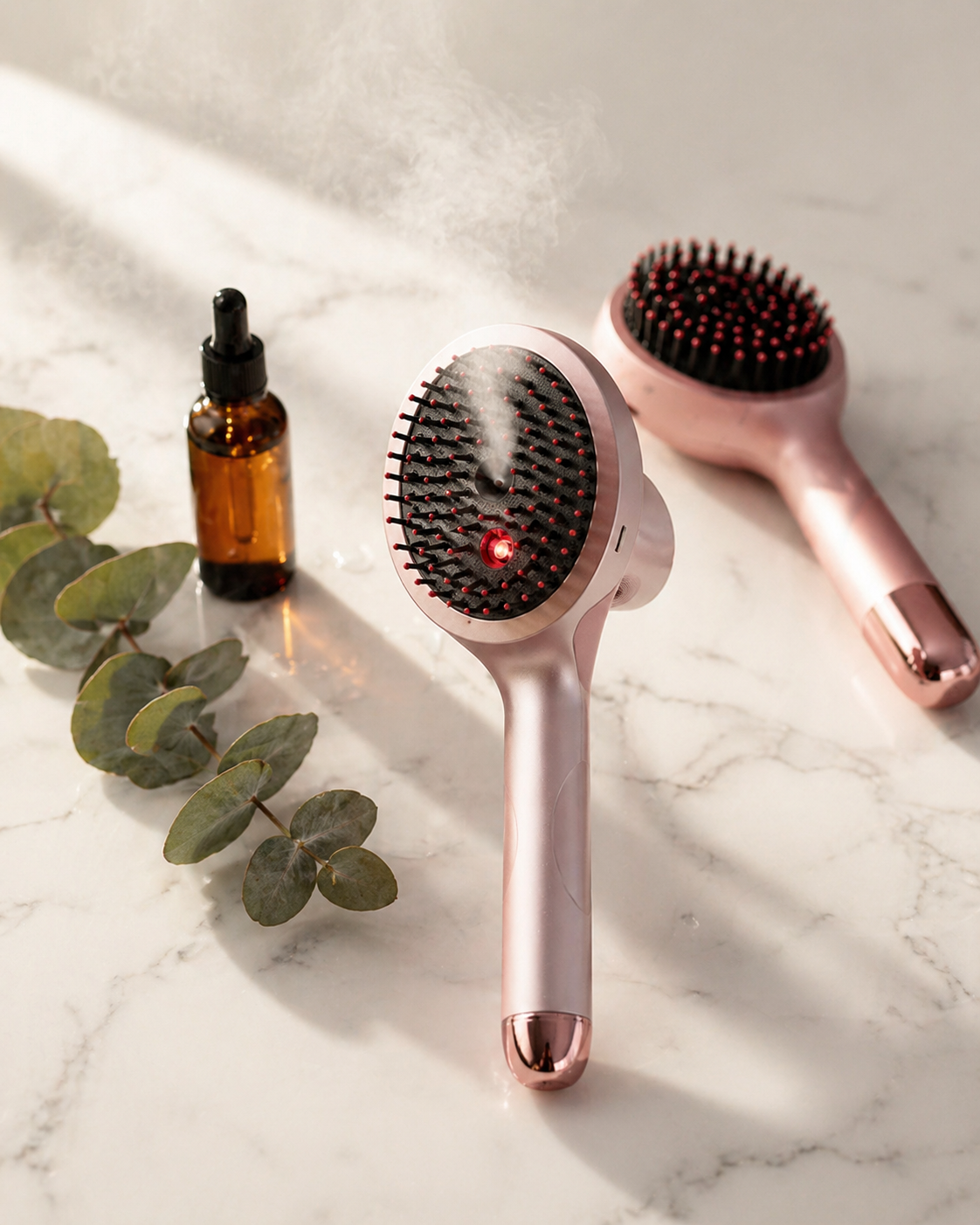
A massaging brush used with your regular cleanse helps loosen the day’s buildup and feels genuinely nice. The Rootli Serum Comb Serum-Infusing Scalp Massage Brush works for this and doubles as a way to distribute serum evenly instead of dropping it all in one spot.
If your scalp feels dry or tight
Serum-led care tends to suit this best. A lightweight, non-greasy formula applied to a clean scalp and worked in with fingertips or a tool keeps the routine gentle. The Rootli Serum is designed as daily lightweight scalp care, and the Mist Hair Comb: Vibrating Scalp Massager helps with even mist application and a soothing massage.
If you want a calming, tactile ritual
Five minutes of slow, intentional massage can shift how your whole head feels. The Rootli Stone Comb – Scalp Gua Sha and the Root Sculptor Premium Pink Scalp Comb – Gua Sha Massager are both built for that gua sha-inspired pressure-and-release motion, and they work beautifully as pre-serum prep.
If you are curious about light-based routines
Light-based scalp wellness has become a popular at-home category, and it pairs nicely with a tracking habit because the ritual itself is easy to repeat. The The Light Therapy Duo and the Rootli Pulse Pro – LED Light Cap are hands-free options for red and blue light scalp care, while the Rootli Glow Comb Dual-Light Scalp Brush folds dual-light care into a daily brushing habit. If you want more coverage, the The LED Power Duo combines full-scalp LED coverage with targeted comb care.
If you would rather look before you buy
Some people prefer to understand the scalp first and choose a ritual second. That is exactly what the The Glow Detection Set is for: checking scalp condition and building a more intentional routine. It pairs naturally with the analyzer you already use for your monthly photo set.
Building a Scalp Analysis Habit That Actually Sticks
The goal is not to become your own dermatologist. It is to be a little more informed than you were last month, to know when your scalp feels best, what you did that week, and what you would like to repeat.
Start small. One baseline check. One photo set. One product change at a time, with four weeks in between so you can actually tell what happened. Keep your notes short and honest, and do not worry about doing it perfectly. Over a season, you will build a picture of your scalp that no generic routine could ever give you.
Your scalp has been waiting for the same attention you give your skin. If you would like a gentle place to begin, the The Glow Detection Set was made for exactly this kind of intentional, look-then-choose approach. Take the baseline this week, keep the photos, and let your routine grow from what you see.