Most of us have a skincare routine we could recite from memory, and a hair routine that amounts to whatever shampoo was on sale. The scalp sits in the middle of that gap, quietly doing a lot of work and getting very little attention. That is where scalp analysis at home comes in. Not as a clinical exercise, and definitely not as something to obsess over, but as a simple, repeatable way to understand what your scalp actually needs before you spend another dollar guessing.
Think of it the way you think about tracking your skin. You notice when your cheeks feel tight or your T-zone gets shiny, and you adjust. Your scalp sends similar signals, and they usually show up before anything else does. Learning to read those cues, and to photograph them honestly, turns scalp care from a random collection of products into an actual routine.
What Scalp Analysis at Home Really Means
A lot of people hear the phrase and picture a dermatologist’s office or a magnifying camera at a salon. At-home scalp analysis is much simpler than that. It is the habit of looking at your scalp on purpose, at the same angle, under the same light, on a regular schedule, so you can tell what is changing and what is not.
Your scalp is skin first
Your scalp is skin, with a denser concentration of hair follicles and oil glands than most of your face. It has a barrier, a microbiome, and a moisture balance that can shift with the seasons, your stress levels, and how often you wash. When that balance feels off, you might notice flaking, itchiness, excess oil at the roots, or a scalp that feels tight rather than comfortable.
None of those observations are diagnoses, and you should not treat them as such. They are just information, the same way you would notice your skin looking dull after a rough week of sleep. The value of scalp analysis at home is that it gives you that information in your own bathroom, on your own timeline.
What a baseline actually does for you
Here is the part most people skip: you cannot see change without a starting point. If you begin a new scalp serum in March and by June you are convinced your hair looks healthier, that is a nice feeling, but it is not proof of anything. A baseline photo, taken before you change a single thing, is what makes the comparison honest.
An honest comparison is useful for a very practical reason too. It tells you whether the ritual you chose is worth repeating. Beauty routines rarely fail because they are bad; they fail because they are mismatched. Someone with an oily, buildup-prone scalp and someone with a dry, tight-feeling scalp need very different things, and neither of them will get there by copying a random routine from the internet.
Shop the scalp ritual
-
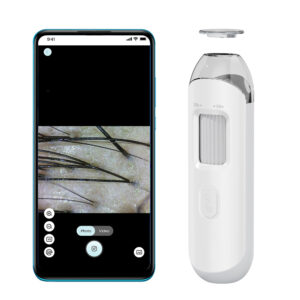
Rootli Scope AI-Connected Scalp & Follicle Analyzer
Price range: $158.00 through $178.00 Select options This product has multiple variants. The options may be chosen on the product page -
How to Do a Scalp Analysis at Home in Five Steps
You do not need a lab coat. You need ten minutes, decent lighting, and a willingness to look closely without judging what you see.
- Start dry and undivided: Before you wash, part your hair in a few sections, down the middle and then two more parts on each side. Dry scalp shows texture, flaking, and oiliness more clearly than wet.
- Look before you touch: Spend a full minute just observing. Notice color, shine, visible flaking, redness along the part lines, or areas that look thinner than others. Then feel: is it oily at the roots, tight, tender, or comfortable?
- Note where you are in your cycle: Scalp oil production shifts through the month for many people, so log it. A rough scalp day that lands the same week every month is a pattern, not a problem.
- Take your baseline photos: Same spot, same light, same distance. More on this below.
- Write one sentence: Not a paragraph, not a rating out of ten. Just one line, something like oily at the crown by day two, slight flaking at the hairline, no tenderness. That is your baseline in words.
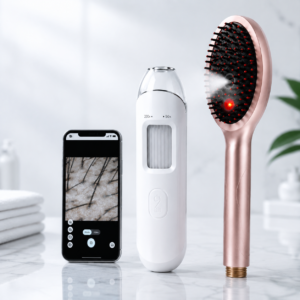
If you want more magnification than your eyes can offer, a handheld tool designed for scalp visibility makes the job easier. The Rootli Scope AI-Connected Scalp & Follicle Analyzer lets you look at your scalp and follicles up close on your own schedule, which is helpful for comparing the same area month to month instead of relying on memory.
Pick a cadence you will actually keep
Weekly is plenty for most people. Monthly is fine if weekly feels like too much. What matters is consistency. A quick check every Sunday evening tells you far more than an intense, hour-long inspection twice a year. If you would rather have a structured starting point, The Glow Detection Set walks you through checking scalp condition and building a more intentional routine around what you find.
Before-and-After Tracking: How to Take Photos That Show Real Change
Phone photos are the most underrated tool in scalp care, and also the easiest to get wrong. Bad tracking photos, with different lighting, different angles, and hair pulled differently, create the illusion of change in either direction. Good ones make the comparison almost boring, which is exactly what you want.
The setup that makes comparisons possible
- Same light, every time: Natural daylight near a window beats bathroom lighting, which casts shadows and shifts color. Pick one spot and stay loyal to it.
- Same time of day: Morning, before washing, on a dry scalp.
- Same four shots: Front hairline, crown, one part line, and one side. Label them in a folder so you are not scrolling through your camera roll later.
- Same distance and angle: Prop your phone against something, or ask someone to hold it. A tripod beats a shaky hand.
- No filter, no flash: You are documenting texture and shine, not making a post.
How to read your before-and-afters without spiraling
Give it time. Scalp and hair changes move on a slow clock. Hair grows roughly half an inch a month, and any shift in how your scalp feels or looks tends to show up over weeks, not days. Comparing photos taken four days apart will only make you anxious about nothing.
When you do compare, look for tone rather than transformation. Does your scalp look calmer along the part line? Does your hair sit with more shine at the roots? Does the flaking you logged in week one look less noticeable by week six? Those small, steady observations are the useful ones.
And if your photos ever show something that worries you, such as a patch that has changed noticeably, persistent irritation, or discomfort that does not settle, that is a conversation for a doctor or dermatologist. At-home tracking is a beauty habit, not a substitute for professional care.
Turning What You Notice Into a Routine You Will Actually Keep
Once you have a baseline and a few weeks of photos, the routine almost writes itself. The goal is not to add twelve steps. It is to choose two or three that match what you are seeing.
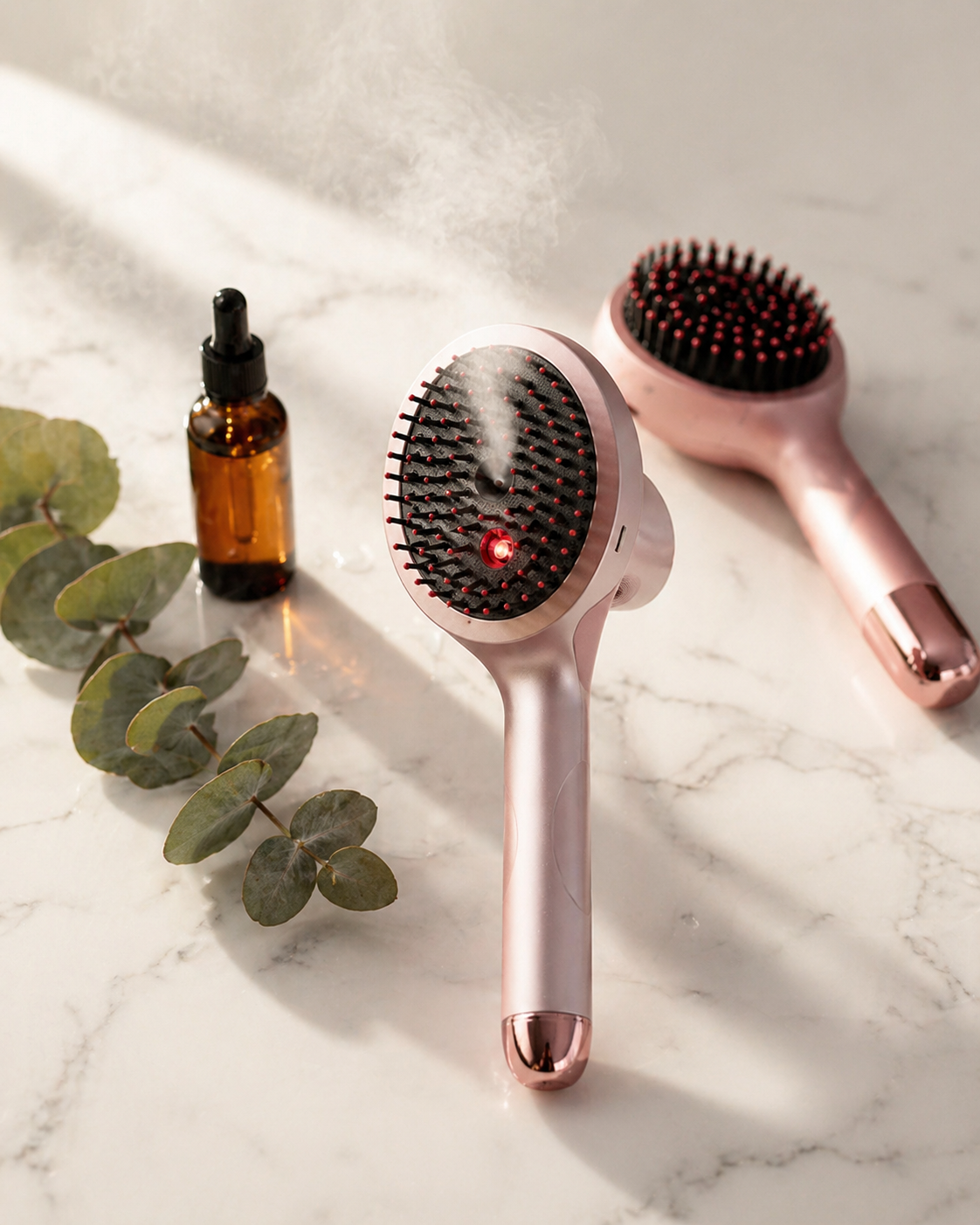
If your scalp reads oily and buildup-prone, lean toward lightweight, serum-led care and regular massage rather than heavy oils. Rootli Serum is a lightweight daily option that layers easily without weighing roots down, and a Rootli Serum Comb Serum-Infusing Scalp Massage Brush helps you distribute it evenly through the scalp instead of dropping it all in one spot.
If your scalp feels dry, tight, or simply under-cared-for, a slower, more tactile ritual tends to feel better than a clinical one, which is exactly what The Natural Ritual Set was designed for. Pair it with the Rootli Stone Comb – Scalp Gua Sha for a few minutes of massage before you apply serum, or reach for the Root Sculptor Premium Pink Scalp Comb – Gua Sha Massager if you prefer a gemstone finish.
For the people who want a weekly ritual, not a daily one
Some of us do better with one meaningful session a week than seven small ones. That is where warm, hands-on scalp care fits beautifully. The Rootli Cap is made for weekly warm scalp spa rituals, a comfortable at-home way to slow down and let your scalp feel cared for. If light-based routines appeal to you, the Rootli Pulse Pro – LED Light Cap offers hands-free red and blue light scalp care you can wear while you read or answer emails, which makes consistency a lot easier to sustain.
None of these are magic. They are tools that support scalp health and help hair look its best when you use them regularly, and when they are matched to what your scalp is actually telling you.
Your First Month of Scalp Analysis at Home
Here is a simple way to start, without buying anything new this week.
- Day 1: Do a dry, five-minute look. Write your one-sentence baseline. Take your four photos.
- Weeks 1 and 2: Keep your current routine exactly as it is. Change nothing. Just check in once a week.
- Week 3: Read your notes. What is consistent? Oiliness, flaking, tightness, or not much at all?
- Week 4: Add one thing, whether that is a serum, a massage tool, or a weekly ritual, that answers what you noticed. Then take your four photos again.
If choosing feels overwhelming, The Rootli Diagnostic Pro is built around understanding your scalp before you choose a ritual, which is a sensible place to start if you would rather not guess.
A Gentle Place to Begin
Scalp analysis at home is not about becoming your own dermatologist, and it is not about chasing perfection. It is about paying attention, the same way you would notice your skin feeling drier in winter and swap in a richer moisturizer. Your scalp has been asking for that attention for a while. A five-minute check, a couple of photos, and one honest sentence is enough to begin.
Start with what you already have. Then, when you are ready to build a routine that fits what you found, Rootli’s scalp-first tools and serums are here to make it feel less like a chore and more like the part of your routine you actually look forward to.