If you have ever stood in front of the mirror, parted your hair, and wondered what your scalp is actually trying to tell you, you are not alone. Scalp analysis is simply the practice of paying close, consistent attention to the skin your hair grows from, the same way you would notice a shift in your complexion. It is not about hunting for problems or staring anxiously at your part line. It is about building a relationship with your scalp so your routine can respond to what it genuinely needs.
At Rootli, we believe the scalp deserves as much care as the face. That means looking before you layer on products, tracking what changes over time, and choosing tools and serums that support a comfortable, balanced-feeling scalp. Below, we will walk through at-home scalp analysis, how to do honest before-and-after tracking, and how to translate what you see into a gentle, repeatable beauty ritual.
What Scalp Analysis Really Reveals About Your Scalp
Think of scalp analysis as observation, not diagnosis. You are not trying to label anything or self-treat a condition. You are gathering simple, honest information: how your scalp feels, how it looks in good light, and how those two things shift from week to week. That information is what makes a scalp care routine feel personal instead of random.
It also keeps you honest about expectations. Scalp analysis is not the same as judging your hair. Hair is the output; the scalp is the environment. When you focus on the environment, you stop chasing quick fixes and start noticing small, meaningful signals that actually guide your choices.
The four things worth noticing first
You do not need to inspect every square inch. Start with four signals that are easy to read at home.
- Oil and shine: Does your scalp look freshly washed on day two, or does it feel coated and heavy by evening?
- Comfort and flaking: Is there tightness, itchiness, or visible flaking around the part line and hairline?
- Visible density along the part: Noticing how much scalp shows through your part helps you compare fairly over months, not days.
- Sensitivity: Does your scalp feel tender when you massage it, or calm and neutral?
None of these observations are verdicts. They are clues. A scalp that feels oily in summer and tight in winter is not misbehaving. It is responding to weather, washing frequency, styling habits, travel, stress, and hormonal shifts. The goal of scalp analysis is to notice the pattern, not to panic over a single day.
Why one glance is never enough
Scalp condition moves. It can look different after a workout, a heat-styling session, a long flight, or a week of skipped washes. That is exactly why before-and-after tracking matters more than any single snapshot. When you compare like with like, same lighting, same day of your wash cycle, same camera angle, you start to see real trends instead of noise.
Shop the scalp ritual
-
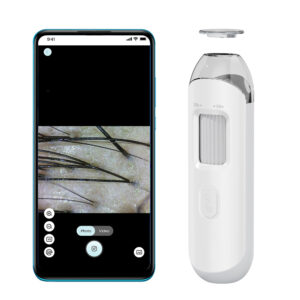
Rootli Scope AI-Connected Scalp & Follicle Analyzer
Price range: $158.00 through $178.00 Select options This product has multiple variants. The options may be chosen on the product page -
How to Do a Scalp Analysis at Home in Under Ten Minutes
A good at-home scalp analysis is quick, low-drama, and repeatable. You are not performing an exam; you are checking in. Ten calm minutes once a week is plenty.
- Pick a consistent moment. Choose the same point in your wash cycle each time, such as the morning after wash day.
- Work with clean, dry hair. Product buildup can mimic flaking and dull your view of the scalp.
- Find real light. Sit near a window or use a bright, neutral lamp. Overhead bathroom lighting flattens texture and hides detail.
- Section in small, deliberate parts. Use a comb tail to part clean lines down the center, then a few inches to each side.
- Photograph the same four spots. Center part, left part line, right part line, and hairline.
- Note sensations, not just visuals. Jot down whether your scalp feels comfortable, tight, oily, or sensitive.
Tools that make scalp analysis clearer
Your eyes and hands will take you surprisingly far. When you want a closer, more consistent view, magnification helps. The Rootli Scope AI-Connected Scalp & Follicle Analyzer gives you magnified scalp and follicle visibility so you can compare the same areas side by side over weeks and store images instead of relying on memory.
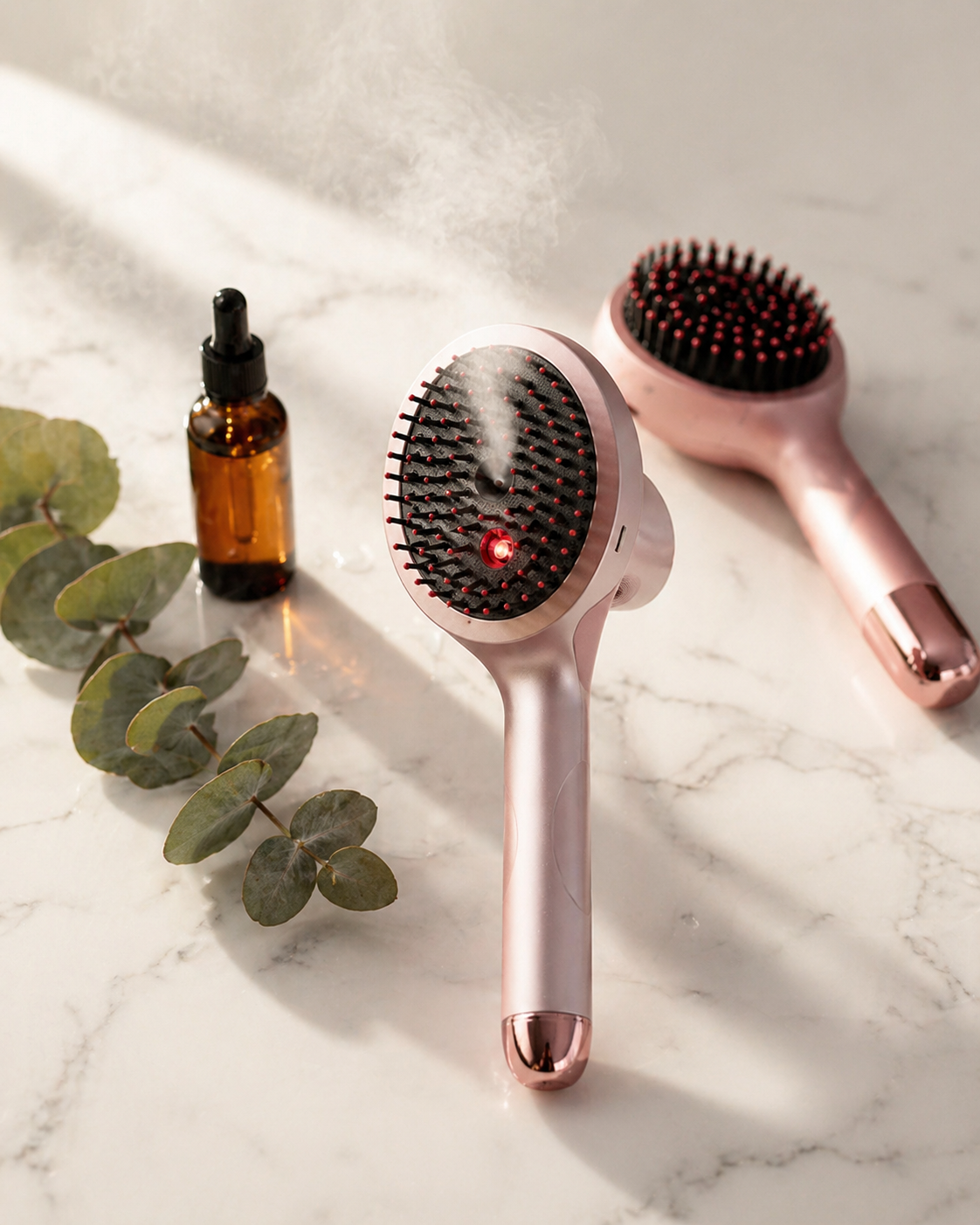
If you would rather start with a guided, routine-building approach, the Rootli Diagnostic Pro is designed around understanding your scalp before choosing a ritual, which is especially helpful if you are not sure whether your scalp leans oily, dry, or sensitive. For daily care between check-ins, the Rootli Glow Comb Dual-Light Scalp Brush turns brushing into a few minutes of intentional scalp attention.
Before-and-After Tracking That Actually Shows You Something
Most people give up on tracking because their photos are unusable: different rooms, different lighting, hair styled three different ways. Fix the setup once, and before-and-after comparisons become genuinely useful.
Build a repeatable photo protocol
- Same time of day, ideally in daylight.
- Same hair state, dry and unstyled works best.
- Same four angles, in the same order.
- Same distance from the scalp, using the same phone or device.
- Same background so your eye is not distracted.
Label each set with the date. A folder on your phone is enough. The point is not to create an archive you never open. It is to give future you a fair comparison.
Keep a two-minute scalp journal
Alongside your photos, note a few words each week. This is where scalp analysis becomes genuinely personal, because how your scalp feels matters as much as how it looks.
- Wash day and how your scalp felt before and after.
- Any tightness, itchiness, or flaking you noticed.
- Products used that week, including serums and masks.
- Anything unusual, such as travel, hard water, a new hairstyle, or a stressful stretch.
What meaningful change actually looks like
Beauty-safe wins are usually quiet. A scalp that feels more comfortable on day two. Less visible flaking around the hairline. Hair that looks glossier and sits a little smoother at the root. A part line that looks fuller in photos taken six weeks apart. These are the kinds of shifts a consistent tracking habit helps you notice, and they are worth celebrating.
A realistic review rhythm
Check in weekly, but only review the bigger picture every four weeks. Compare your eight-week and twelve-week sets rather than day one versus day three. Scalp and hair changes are slow by nature, and a monthly review keeps you curious instead of obsessive. If something looks or feels persistently uncomfortable, that is a good moment to check in with a healthcare professional. Scalp analysis is a beauty ritual, not a substitute for medical care.
Turning What You See Into a Scalp Care Routine
Once you have a few weeks of observations, patterns usually appear. Maybe your scalp feels balanced for two days and heavy on day three. Maybe it feels tight after clarifying washes. Maybe your part line looks denser during stretches when you have been consistent with massage. Whatever you notice, let it guide the ritual instead of copying someone else’s routine.
Matching rituals to what you observe
- Feels oily or coated quickly: keep serum light and focus on thorough, gentle cleansing and scalp massage.
- Feels tight or dry: lean into hydrating mists, slower massage, and nourishing serum applied to the scalp rather than the lengths.
- Feels sensitive or reactive: simplify. Fewer products, softer pressure, and lukewarm water.
- Feels balanced and comfortable: this is the moment to maintain with a consistent weekly ritual rather than adding more.
For serum-led care, the Rootli Serum is a lightweight daily option, and the Rootli Serum Comb Serum-Infusing Scalp Massage Brush helps you distribute it evenly while massaging. If you prefer a mist-first approach, the Rootli Infuser – Nano Mist Scalp Device offers fine, even coverage across the scalp.
Massage is the quiet hero of any scalp analysis habit. Five minutes with the Rootli Stone Comb – Scalp Gua Sha before serum is a lovely way to prep the scalp and slow down. For light-based rituals, the LED Power Duo pairs full-scalp coverage with targeted comb care, while the Rootli Pulse Pro – LED Light Cap makes hands-free sessions easy to keep up with. And if you love a weekly warm ritual, the Rootli Cap turns ten minutes into something that feels like a spa appointment at home.
Keep the routine small enough to repeat
The best scalp care routine is the one you will actually do on a Tuesday. Two or three steps, done consistently, will tell you far more than a complicated routine you abandon after a week. Your tracking notes will show you what is worth keeping, and what you can happily let go of.
Start Your Scalp Analysis Ritual Tonight
You do not need a full reset or a shelf of new products. You need ten minutes, decent light, and a willingness to look closely without judgment. Take your first four photos tonight, write one honest sentence about how your scalp feels, and let that be your baseline. Then repeat it next week.
Over a month, you will know more about your scalp than most people learn in a lifetime of guessing, and you will be able to choose your rituals with intention. Start with the Rootli Scope AI-Connected Scalp & Follicle Analyzer for closer observation, or the Rootli Diagnostic Pro if you would like help shaping a routine around what you find. Your scalp has a story. This is how you start listening.