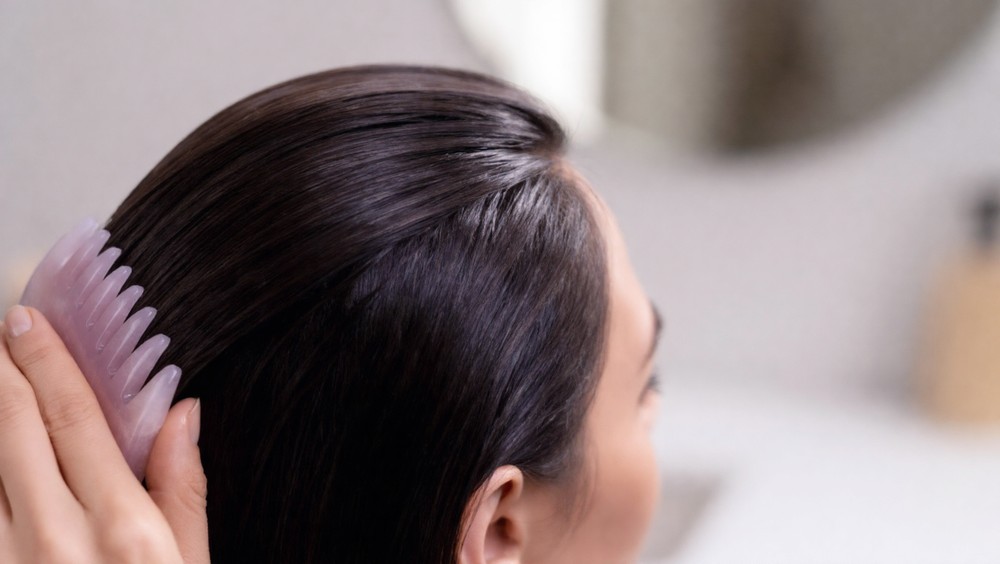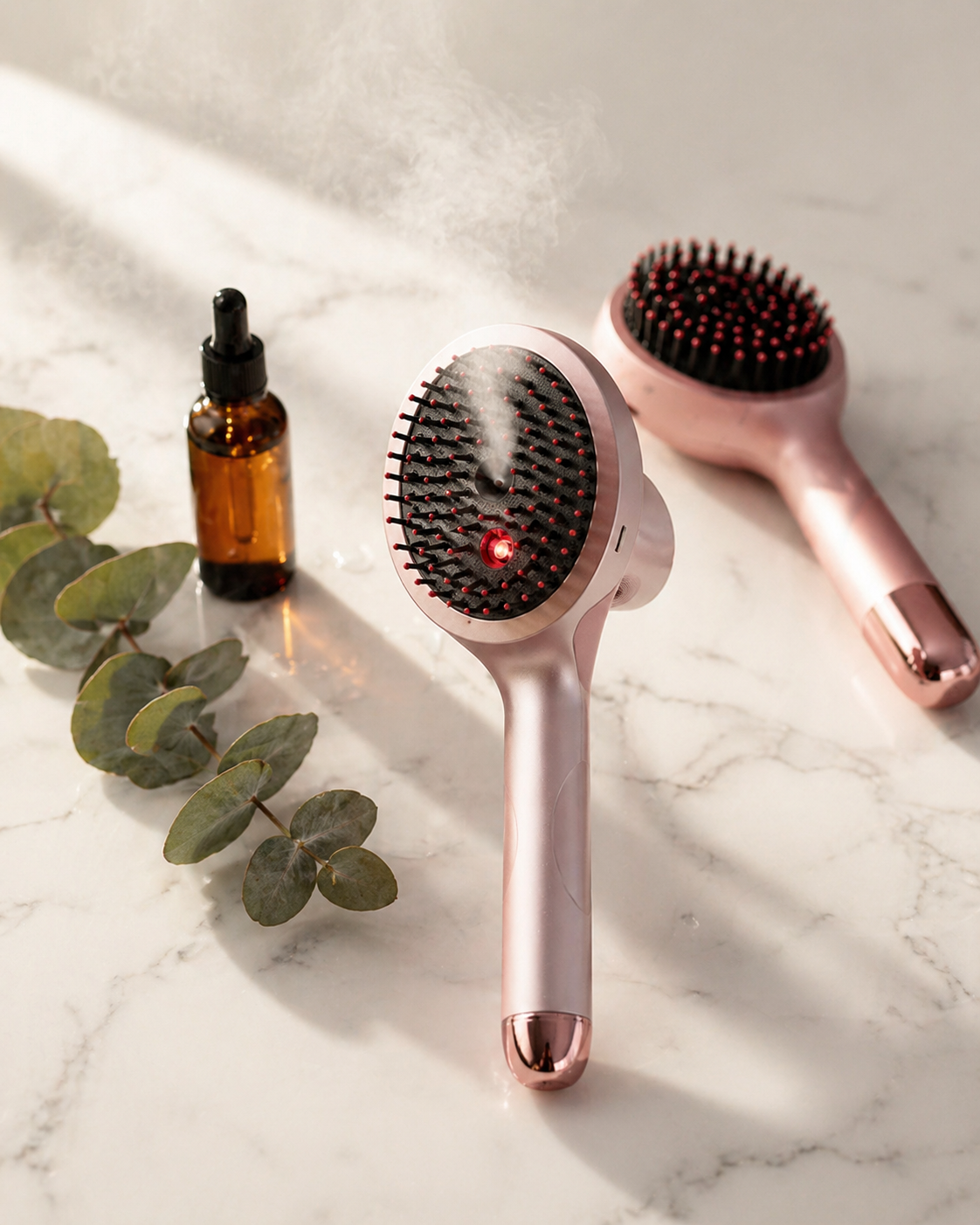
For years, hair care started at the mid-lengths and ended at the ends. Shampoo, conditioner, a mask when we remembered, and whatever the scalp received in the process was incidental. That’s changing. As at-home beauty tech has migrated from our cheekbones to our hairlines, the scalp massage routine has quietly become one of the most talked-about steps in modern hair care, sitting right alongside gua sha, LED, and serum-led rituals.
It isn’t hard to see why. The scalp is skin, and it responds to the same things facial skin does: gentle movement, consistency, a little warmth, and products that actually reach it. A scalp massage routine isn’t a magic switch. It’s a habit, a few minutes of intentional touch that makes the rest of your routine feel less like maintenance and more like care.
Why Scalp Massage Fits So Naturally Into Modern Hair Care
Massage is the rare beauty step that asks nothing of you but attention. No downtime, no tingling actives to build up to, no complicated order of operations. You can do it dry, in the shower, or with a serum on a Sunday night, and it still counts.
It also fits the way we’ve started thinking about hair overall. We’re less interested in forcing a result and more interested in creating conditions: a comfortable scalp, hair that looks glossier and fuller, a routine we don’t dread opening the cabinet for.
There’s a practical appeal too. Scalp massage works with every hair type and texture, whether your hair is fine, thick, curly, straight, color-treated, or styled with extensions. There’s no shade match, no learning curve, and no wrong way to do it as long as you stay gentle.
It’s the facial massage you already love, one inch higher
If you’ve ever spent three unhurried minutes working a facial oil into your jawline, you already understand the appeal. The scalp holds tension the same way the jaw does, especially along the hairline, the temples, and the base of the skull. Working through those areas feels immediately good, which is exactly why people keep coming back to it.
What a scalp massage actually does
Here’s the honest version. Massage helps distribute product more evenly across the scalp instead of letting it pool in one spot, softens the feeling of tightness, and turns a rushed wash day into something closer to a ritual. Many people also find that a scalp that feels clean and comfortable simply looks better, with more movement through the roots and a healthier-looking finish.
- Helps serums and oils spread rather than sit in a single patch
- Loosens the tight, tender feeling that builds up around the hairline
- Makes a consistent routine easier to keep, because it genuinely feels nice
- Adds a few minutes of calm to an otherwise functional wash day
Shop the scalp ritual
-
-
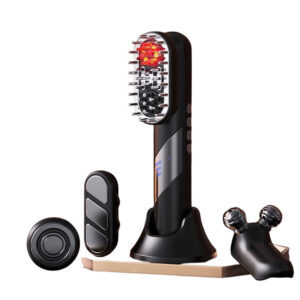
Rootli Wand Pro 4-in-1 Smart Beauty & Scalp
$298.00 Select options This product has multiple variants. The options may be chosen on the product page
How to Build a Scalp Massage Routine You’ll Actually Keep
The best scalp massage routine is the one that survives a busy week. That means short, repeatable, and attached to something you already do: right before you shower, right after you cleanse, or while a treatment sits and does its work.
Timing, pressure, and technique
Work in slow circles rather than fast scrubbing. Press with the pads of your fingers or the soft tips of a tool, never your nails, and move in small sections: hairline, temples, crown, then the back of the head. Two to three minutes is plenty on a normal night. Five feels luxurious, and on a Sunday it’s practically a spa appointment.
Dry scalp massage is best for tension and release. Damp scalp massage is better for spreading product. If you’re using a serum, apply it first and massage after, so your hands and your tool are doing double duty instead of working against each other.
Three ways to make it stick
- Anchor it: pair your scalp massage routine with wash day so it never becomes an extra task on the list.
- Keep a tool within reach: a comb or massager on the vanity gets used far more often than one buried in a drawer.
- Lower the bar: on low-energy nights, sixty seconds of gentle pressure still counts as showing up.
How often is enough?
Twice a week is a realistic starting point, and nightly is a lovely ceiling. Consistency matters more than duration, so a brief daily pass will do more for you than an intense twenty-minute session once a month.
Where Gua Sha Belongs in a Scalp Care Routine
Gua sha made the jump from facial tools to the scalp for a simple reason: the shape works. A curved edge follows the hairline, the ridge behind the ear, and the base of the skull in a way fingertips simply can’t. Instead of circles, you’re making slow, deliberate strokes, which changes the entire mood of the ritual.
Unlike vibrating tools, which are all about motion, a stone comb is about pace. You’re not trying to cover ground quickly. You’re gliding, pausing, and letting the weight of the tool do the work while your shoulders drop a little.
Used on the scalp, gua sha feels less like stimulation and more like sculpting and release. Start at the hairline and glide back toward the crown, then down toward the neck. Keep the pressure light and even. A little slip from a serum or oil makes the strokes smoother and far more comfortable. The Rootli Stone Comb – Scalp Gua Sha is designed for exactly this: five quiet minutes of massage that doubles as pre-serum prep.
Gua sha before serum, not instead of it
A good sequence is massage first, product second, or product first if your tool glides better that way. Either way, the point is the same: the ritual helps your product move where you want it and leaves the scalp feeling cared for. If you prefer a sculpting, gemstone feel, the Root Sculptor Premium Pink Scalp Comb – Gua Sha Massager offers a similar motion with a slightly firmer edge.
Circulation-Focused Scalp Care, Without the Overpromises
You’ll see a lot of dramatic claims attached to circulation and scalp health, and we’d rather keep it grounded. Movement, warmth, and massage support a comfortable, balanced-feeling scalp, and that is a perfectly good reason to do them. You don’t need an outsized promise to justify five minutes of feeling good.
Circulation-focused rituals are really about rhythm: warm water instead of scalding, a few minutes of movement each day, gentle massage, and products that don’t leave the scalp feeling stripped or weighed down. Warmth is especially underrated. A weekly warm scalp moment, like the one you get with the Rootli Cap, feels like a spa treatment you can do in your living room while the coffee brews.
- Choose warm, not hot, water when you cleanse
- Massage for a few minutes rather than scrubbing hard for thirty seconds
- Reach for a lightweight serum instead of heavy layers that sit on the surface, like the Rootli Serum built for daily, featherweight care
- Keep the scalp clean and comfortable, then leave it alone to do its thing
Give any new habit a few weeks before you judge it. The reward of a scalp care routine is usually cumulative and quiet: a scalp that feels comfortable, roots that look less flat, and a routine that has become something you look forward to rather than something you endure.
Tools That Make the Ritual Feel Effortless
You can absolutely build a scalp massage routine with your hands alone. But the right tool removes friction, both literally and figuratively, and makes you far more likely to keep going past week one.
- Rootli Stone Comb – Scalp Gua Sha: a five-minute gua sha-inspired massage and pre-serum prep step.
- Rootli Wand Pro 4-in-1 Smart Beauty & Scalp: red light, EMS, massage, and serum-assisted scalp rituals in one handheld device.
- Rootli Serum Comb Serum-Infusing Scalp Massage Brush: massages while it distributes serum through the scalp, ideal for parting-line application.
- Mist Hair Comb: Vibrating Scalp Massager: mist application plus vibrating massage for a lighter, fresher feel.
- Rootli Scope AI-Connected Scalp & Follicle Analyzer: see your scalp up close before deciding what your routine needs next.
If you’d rather start with a curated set than build your own from scratch, the Natural Ritual Set keeps things gentle and tactile.
A Five-Minute Evening Scalp Ritual
Here’s a simple sequence that fits into a weeknight, no appointment required.
- Minute one: brush or comb through dry hair to loosen buildup and settle the scalp.
- Minute two: apply a few drops of serum along your part and hairline.
- Minute three: massage in slow circles from the hairline to the crown, then to the base of the skull.
- Minute four: switch to a gua sha or stone comb for slow, gliding strokes.
- Minute five: finish with light pressure at the temples, breathe out, and let it go.
Do it twice a week and it becomes second nature. Do it nightly and it becomes the step you look forward to most.
Start Small, Stay Consistent
Scalp care isn’t a dramatic overhaul. It’s a shift in attention, the same way we slowly learned to treat our faces with more patience. A scalp massage routine, a few gua sha strokes, a moment of warmth: none of it is complicated, and all of it adds up to a scalp that feels comfortable and hair that looks healthier for it.
Start with one tool and one night a week. Explore the Rootli Stone Comb – Scalp Gua Sha or the Rootli Wand Pro 4-in-1 Smart Beauty & Scalp and see which ritual fits your hands best. Your scalp has been waiting for the same care you give everything else.