Most of us learn to read our faces long before we ever think about reading our scalps. We notice when our skin looks dull, when it feels tight, when something has shifted. The scalp rarely gets that same attention — it is hidden, and honestly, a little intimidating. But scalp analysis is simply the practice of paying attention on purpose: looking closely, noticing patterns, and giving yourself a before-and-after reference point instead of guessing.
Done gently and consistently at home, scalp analysis turns vague worry into useful information. It helps you choose products that match what your scalp actually seems to need, and it helps you see small shifts over weeks rather than judging everything in a single mirror moment. Here is how to approach it with curiosity, a calm routine, and realistic expectations.
What a Scalp Analysis Can (and Can’t) Tell You
A scalp analysis is an observation practice, not a verdict. It gives you a clearer picture of what is happening on the surface of your scalp — how much oil you produce, where flaking tends to appear, which areas feel sensitive, how your hair feels at the root — and it gives you a way to compare today with last month. That information is genuinely useful for building a scalp care routine.
What it cannot do is explain why something is happening or tell you whether it needs medical attention. If you notice persistent irritation, painful spots, sudden changes in shedding, or anything that worries you, that is a conversation for a dermatologist or doctor — not a beauty tool. Think of at-home scalp analysis as a way to be more informed and more intentional, and leave the medical questions to the professionals.
The four things worth noticing
You do not need to evaluate everything at once. Focus on a few clear signals and let the rest go.
- Oil balance: Does your scalp feel comfortable on day one after washing, or greasy by evening? Notice whether oil builds up evenly or mostly at the crown and hairline.
- Flaking and residue: Look for small flakes, product buildup, or a film near the roots. Note where they appear and whether they change with your wash schedule.
- Comfort: Itchiness, tightness, or sensitivity are worth tracking. A balanced-feeling scalp should feel quiet most of the time.
- Root appearance: Part your hair in the same spot and notice how the scalp looks along the part line — clear, calm, and evenly toned is the goal, not perfection.
Shop the scalp ritual
-
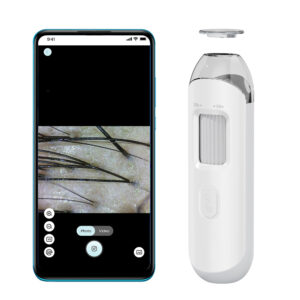
Rootli Scope AI-Connected Scalp & Follicle Analyzer
Price range: $158.00 through $178.00 Select options This product has multiple variants. The options may be chosen on the product page -
How to Do a Scalp Analysis at Home, Step by Step
The best at-home scalp analysis is short enough that you will actually repeat it. Ten minutes, once a month, in good light, is plenty. Treat it like a check-in rather than an inspection.
- Start with dry hair and clean hands. Sit near a window or use a bright lamp. Natural light shows texture and tone far better than bathroom bulbs.
- Part your hair in sections. Use a comb to create four or five clean part lines — front hairline, crown, both sides, and the back. Look at each one for a few seconds.
- Use magnification if you have it. A phone camera zoom or a dedicated device gives you a much closer view than your eyes alone. The Rootli Scope AI-Connected Scalp & Follicle Analyzer was designed for exactly this kind of close-up look at the scalp and follicle area, so you can see what you are working with instead of squinting.
- Feel as well as look. Press gently along the hairline and crown. Notice tightness, tenderness, or any spots that feel different from the rest.
- Write down three observations. Not ten. Three. Keep them plain: oily at the crown, small flakes near the temples, scalp feels tight after washing.
If you want a more structured starting point, The Rootli Diagnostic Pro is built around the idea of understanding your scalp before choosing a ritual — a helpful mindset shift if you tend to buy products first and ask questions later.
Do it at the same time each month
Scalp analysis only becomes meaningful when it is comparable. Pick a day — the first Sunday, the day before you wash, whatever fits — and repeat the same steps in the same light. Same part lines, same order, same three notes. Consistency is what turns a random look into a real baseline.
Before-and-After Tracking That Shows What Actually Changed
Most beauty regret comes from not having a before. We change three things at once, wait two weeks, and then have no idea what helped. A simple before-and-after habit fixes that.
Set your baseline properly
Before you start a new product or routine, capture where you are now. Take photos of your part line, hairline, and crown in the same light, from the same angle, with your hair parted the same way. Add a short note about how your scalp feels and how your hair looks at the root. This takes five minutes and saves months of second-guessing.
The Glow Detection Set is a nice fit here if you want a more intentional way to check scalp condition and build a routine around what you find, rather than around what you assume.
Check in monthly, not daily
Daily mirror checks tend to feed anxiety, because scalps do not change on a daily timeline. Monthly is enough to see patterns. Compare your new photos side by side with your baseline, and ask three questions: Does my scalp feel more comfortable? Does my hair look glossier at the root? Has my routine actually been consistent?
If the answer to the last question is no, that is your real finding — not a product problem. Consistency beats intensity almost every time.
Track the routine, not just the result
Keep a two-line log: what you used and how your scalp felt. Over eight to twelve weeks, patterns appear. You might notice that your scalp feels calmer when you massage before washing, or that buildup shows up when you skip clarifying. That is the kind of insight no product page can give you.
Building a Routine Around What You Actually See
Once you have a baseline and a few honest observations, choosing a routine gets much easier. If your scalp feels tight and under-stimulated, gentle massage and hydration make sense. If it feels congested, focus on cleansing and light serum layers. If it feels sensitive, simplify.
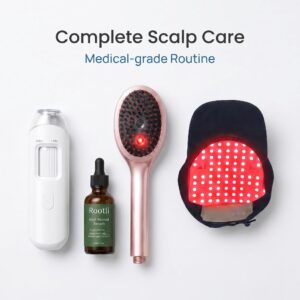
A few Rootli tools fit naturally into this observation-first approach:
- For serum-led care, the Rootli Serum is a lightweight daily option, and the Rootli Serum Comb Serum-Infusing Scalp Massage Brush helps distribute it evenly while massaging the scalp.
- For a tactile five-minute ritual, the Rootli Stone Comb – Scalp Gua Sha works well as pre-serum prep, especially on days when your scalp feels tight.
- For weekly warm-spa comfort, the Rootli Cap turns scalp care into something you look forward to rather than another task.
- If you want light-based wellness in your routine, the Rootli Pulse Pro – LED Light Cap offers hands-free red and blue light care.
None of these are magic. They are simply pleasant, well-designed tools that make a consistent scalp care routine easier to keep — which is the part that actually matters.
A Gentler Way to Measure Progress
Scalp analysis works best when it is not fueled by fear. The point is not to find something wrong; it is to know your scalp well enough to care for it thoughtfully. Some months your notes will say nothing much changed. That is a fine result. A comfortable, balanced-feeling scalp and healthy-looking hair are quiet wins, not dramatic transformations.
Start with one baseline photo, three notes, and a monthly reminder. If you want a more guided way in, begin with The Rootli Diagnostic Pro or the Rootli Scope AI-Connected Scalp & Follicle Analyzer, and let what you see shape your ritual rather than the other way around.
Your scalp has been with you through every season. Ten minutes a month is a small, kind way to return the favor.