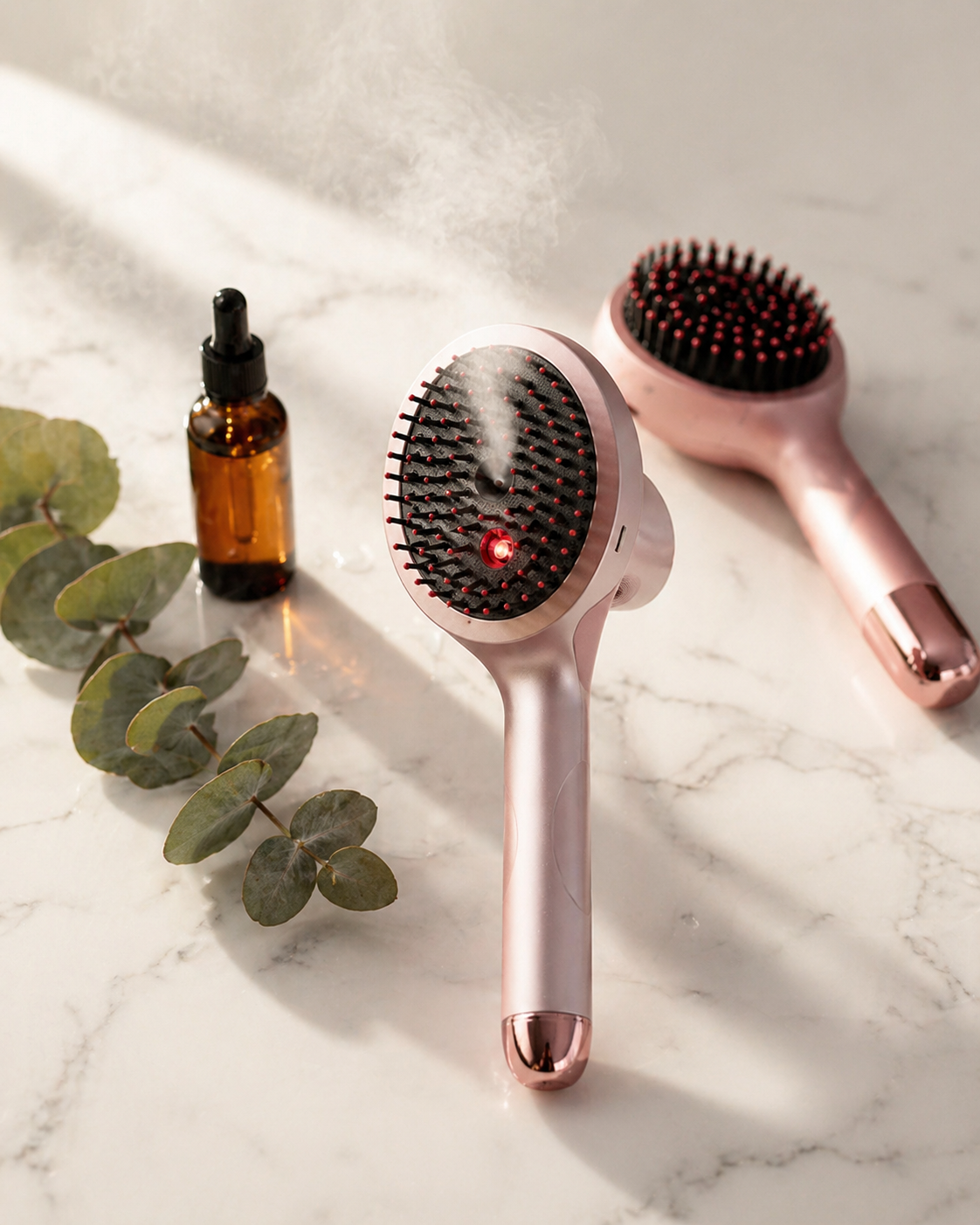
Most of us learned to look closely at our faces — the texture, the tone, the small shifts that show up after a late week or a good stretch of sleep. The scalp rarely gets that same attention. We wash it, style over it, and move on. Yet the scalp is skin, and skin changes. A scalp analysis at home is simply the habit of looking, noticing, and keeping a light record of what you see, so your scalp care routine can be built on observation instead of guesswork.
This isn’t about diagnosing anything or chasing a perfect scalp. It’s about building a small, repeatable ritual — one that gives you language for what your scalp is doing and a way to tell whether the products and habits you love are actually serving you. Think of it as a beauty journal for the skin you can’t easily see.
What a Scalp Analysis at Home Can and Can’t Tell You
A scalp analysis at home is an observation practice, not a medical one. You’re noting patterns: where oil gathers first, whether your scalp feels tight or comfortable after washing, whether the skin along your part looks calm, and how your hair feels at the root. Those notes are genuinely useful. They help you choose between a lightweight serum and a richer one, between a gentle massage ritual and a more targeted device, between doing more and doing less.
What it can’t do is diagnose. If you notice persistent irritation, painful spots, sudden changes in shedding, or flaking that doesn’t settle, that’s a conversation for a dermatologist or your doctor — not a beauty article, and not a mirror. At-home scalp analysis sits firmly in the beauty lane: it supports scalp health by helping you respond earlier and more thoughtfully to everyday changes.
Why the scalp deserves the same attention as the face
The skin on your scalp is subject to the same things your face is — cleansing, product buildup, seasonal dryness, stress, sun. It just happens to be covered by hair, which makes it easy to ignore until something feels off. Checking in regularly means small shifts stay small, and you stop being surprised by your own head.
Five things worth writing down
- Oiliness at the roots, and how quickly it returns after washing
- Tightness, tingling, or sensitivity after cleansing
- Flaking or buildup visible along the part
- How the part line and crown look in consistent photos
- How hair feels at the root — soft, coated, weighed down, or light
Shop the scalp ritual
-
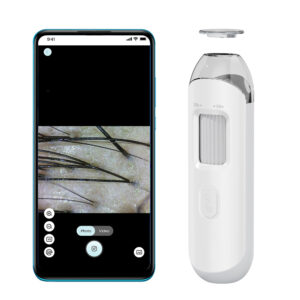
Rootli Scope AI-Connected Scalp & Follicle Analyzer
Price range: $158.00 through $178.00 Select options This product has multiple variants. The options may be chosen on the product page -
How to Do a Scalp Analysis at Home in Five Minutes
You don’t need a full evening or a special setup. Five quiet minutes, once a week, is enough to build a real picture.
Start with good light and a clean part
Light does most of the work. Sit near a window or under a bright, indirect lamp, then part your hair in a straight line down the middle and again a couple of inches to each side. You’re looking at the skin itself, not the hair. If your phone has a zoom, use it — or hold a mirror at an angle so light hits the scalp instead of reflecting off your strands.
Pay attention to feel, not just sight
Run a fingertip along your hairline and down the part. Notice temperature, tightness, any tenderness. A comfortable scalp usually feels unremarkable — that’s the goal. A balanced-feeling scalp isn’t something you notice much at all, and that’s a lovely thing to be able to write down.
Check the same four zones every time
Consistency is what turns looking into tracking. Cover the same spots each week:
- The front hairline and temples
- Along your natural part line
- The crown, where product and tension often gather
- The nape and the area behind the ears
Write three lines, not an essay
Notes work better when they’re short enough to actually keep. Three lines is plenty: what you saw, what you felt, and one word for the overall impression — calm, tight, oily, dry, sensitive. Date it. After a month, those three-line entries start to read like a pattern instead of a pile of observations.
Before-and-After Tracking That Actually Shows Change
Memory is a generous editor. Without a record, it’s nearly impossible to know whether the last six weeks of care changed anything at all. Before-and-after tracking fixes that, and it doesn’t require special equipment — though a closer look certainly helps.
If you want more detail than a phone camera can offer, the Rootli Scope AI-Connected Scalp & Follicle Analyzer gives you a magnified view of the scalp and follicles so you can compare the same spot over time with more confidence. Think of it as a visibility tool — a way to see what your fingertips can only guess at — and it pairs naturally with short, dated notes.
A photo checklist that keeps comparisons fair
Before-and-after photos are only useful if the conditions match. Otherwise you’re comparing a sunny Tuesday to a rainy Thursday and calling it progress.
- Take photos on the same day of your wash cycle, ideally day one
- Use the same room, the same light, and the same time of day
- Part your hair in the same three lines each time
- Stand the same distance from the mirror
- Label the file with the date so nothing gets lost
Then resist the urge to check daily. Every two weeks is plenty. The changes worth noticing in scalp care are gradual, and looking too often makes you read noise as progress.
Keep the language kind and specific when you review your photos. “The skin along my part looks calmer.” “My roots feel lighter.” “My hair looks glossier in this light.” Those are observations you can act on. A photo is not a verdict on you.
Turning What You Notice Into a Routine That Fits
After a few weeks of notes, patterns start to surface — and different patterns point toward different rituals.
When your scalp reads dry or tight
Reach for hydration and warmth rather than intensity. A five-minute massage before you apply anything helps the skin feel more comfortable and makes products easier to spread evenly. The Rootli Stone Comb – Scalp Gua Sha is made for exactly that pre-serum moment. Follow with something lightweight and non-greasy, like Rootli Serum, applied in small amounts along the part and worked in gently.
When your scalp reads oily or product-heavy
Less is the move. Cleanse gently, go easy on rich oils at the root, and choose tools that help you use less product while still reaching the spots that need it. The Rootli Serum Comb Serum-Infusing Scalp Massage Brush distributes serum through the scalp with a massage that feels genuinely good — which is often the difference between a routine you keep and one you abandon.
When your scalp reads tense, or you want a weekly reset
Tension is one of the most common findings in a first scalp analysis, and often the easiest to shift. The Rootli Cap turns a weekly warm scalp ritual into something you look forward to, while the Rootli Pulse Pro – LED Light Cap makes hands-free, light-based scalp care part of the same wind-down. Neither is a fix for anything — they’re ritual tools that make consistency feel good, and consistency is the whole point.
When you’re not sure where to begin
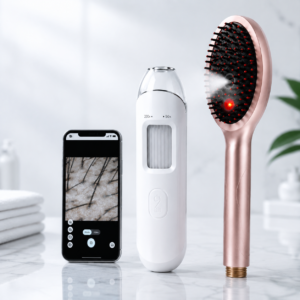
Start with looking. The Glow Detection Set was built around this exact idea: checking scalp condition first, then building a more intentional routine from what you find. It’s a gentle entry point if the idea of “analyzing” your scalp sounds clinical — it isn’t. It’s just paying attention, with a little help.
Why the Notes Matter More Than the Products
It’s tempting to treat scalp care as a shopping problem — find the right serum, the right device, done. But the people who get the most out of their routine are usually the ones who pay attention. They notice that their scalp feels different in winter, that one shampoo leaves them tight, that the two weeks they actually used the massage comb were the two weeks their hair looked glossier.
A scalp analysis at home gives you that feedback loop. It turns vague dissatisfaction into specific information, and specific information into better choices. You stop buying on hope and start choosing based on what you’ve actually seen in your own mirror.
Start With One Honest Look
You don’t need a full routine, a drawer of devices, or perfect discipline. You need five minutes, decent light, and three lines in your notes app. Do it this week. Do it again in two weeks. Notice what repeats — and be gentle with what you find.
If you’d like a starting point that matches the spirit of all this — look first, then choose — the Rootli Scope AI-Connected Scalp & Follicle Analyzer and the Glow Detection Set are the two we’d point you toward. Neither promises anything dramatic. They simply help you see your scalp more clearly, which is where every good routine begins.