Most of us have a clear picture of our skin’s mood on any given day. We know when it feels tight, when it feels oily, when a product is finally working. Our scalp rarely gets that same attention, even though it is skin too. Scalp analysis is simply the habit of looking, noticing, and tracking what is happening up there before you decide what your routine needs.
It does not require a clinic visit or a complicated spreadsheet. With a little daylight, a consistent ritual, and a few tools that make the invisible visible, at-home scalp analysis can turn guesswork into a genuinely useful beauty habit, one that helps you choose products with intention instead of hope.
What Scalp Analysis Actually Tells You
Scalp analysis is not a diagnosis and it is not a scorecard. Think of it as a check-in: a way to observe the condition of your scalp over time so you can respond to what you actually see.
What you are really looking for is pattern and change. Is your scalp usually comfortable, or does it feel tight and itchy by day two? Does buildup appear along the part line quickly, or does your scalp stay balanced-feeling through the week? Those patterns tell you far more than any single snapshot.
A few things worth observing
- Flaking or visible buildup near the part and hairline
- Redness or irritation along the hairline and behind the ears
- Oiliness, and how quickly the scalp starts to feel slick after washing
- Dryness or tightness, especially right after cleansing
- Sensitivity or tenderness when you massage
- How full the hair looks along your part and at the temples
Notice that none of these are emergencies. They are information. A scalp that feels oily by Tuesday is telling you something different than a scalp that feels tight and flaky, and each one calls for a different kind of care.
Shop the scalp ritual
-
Rootli Scope AI-Connected Scalp & Follicle Analyzer
Price range: $158.00 through $178.00 Select options This product has multiple variants. The options may be chosen on the product page -
How to Do a Quick Scalp Check at Home
You can do a meaningful scalp check in about five minutes, ideally on a wash day before you apply anything. The goal is not perfection. It is consistency.
Work with real light
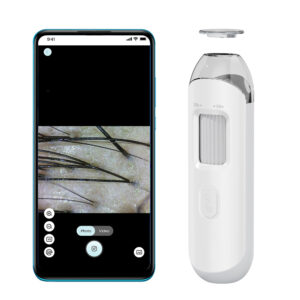
Natural daylight is your best friend here. Stand near a window, or use a bright, neutral lamp. Harsh overhead lighting flattens texture, and dim bathroom light hides exactly the details you are trying to see. For a closer look, a tool like the Rootli Scope AI-Connected Scalp & Follicle Analyzer offers magnified visibility of the scalp and follicle area, so you can see what your eyes alone tend to miss.
Part in sections, not all at once
Use a comb or your fingers to part the hair in a few places: down the center, along each temple, and at the crown. Look at the scalp first, then at the hair itself. How does it sit? How does it catch the light? How does the part line compare to last month?
Feel as well as look
Press gently with your fingertips and move the scalp in small circles. Does it move freely, or does it feel tight? Is there any tenderness? Tension in the scalp is common, especially if you wear your hair up often, and it is one of the easiest things to soften with regular massage.
Write down three words
Before you forget, jot down three words that describe your scalp today: oily, calm, slightly itchy. That tiny note is the beginning of real tracking.
Before-and-After Tracking That Actually Sticks
Before-and-after tracking gets a bad reputation because most people do it once, in bad lighting, and then feel discouraged. Done well, it is one of the most motivating parts of a scalp care routine, because progress with the scalp is slow and quiet, and photos catch what memory does not.
Keep the conditions identical
- Same spot in your home, same time of day
- Same lighting, ideally indirect daylight
- Same hair state: freshly washed, air-dried, no styling products
- Same angles: front hairline, center part, crown, one temple
- Same distance from the camera, and no flash
Take your before set today, then repeat every two to four weeks. Do not photograph daily. It is too noisy, and it turns a gentle ritual into an anxious habit.
Log more than photos
Photos show appearance. Notes show experience. A four-line entry is plenty: the date, how your scalp felt, what you used that week, and anything that changed, like travel, a new shampoo, a stressful stretch, or a hot yoga phase. Over a couple of months, patterns emerge that no single product review could ever tell you.
If you want a more structured starting point, the Rootli Diagnostic Pro is designed for exactly this: understanding your scalp before you choose a ritual, so your routine is based on what you actually see rather than what you assume.
Reading Your Results Without Overreacting
Here is the honest part. Scalp changes are slow. Hair grows in cycles, and the scalp’s condition shifts gradually with seasons, stress, travel, and the products you use. Give any new routine at least eight weeks before you judge it, and try to change only one thing at a time so you know what is actually helping.
Be fair about what better looks like, too. It is rarely dramatic. It usually shows up as a scalp that feels comfortable more days than not, less visible buildup along the part line, hair that looks glossier and sits more smoothly, and less tightness when you massage.
And be careful with comparison photos taken in different light. A sunny window can make anyone’s scalp look redder. A dim room can make hair look denser. If a photo surprises you, take another one under your standard conditions before you draw conclusions.
Matching What You Find to the Right Scalp Ritual
Once you have a few weeks of notes, the routine basically chooses itself. Here is how to translate observations into gentle, practical care.
If you notice buildup or oiliness early in the week
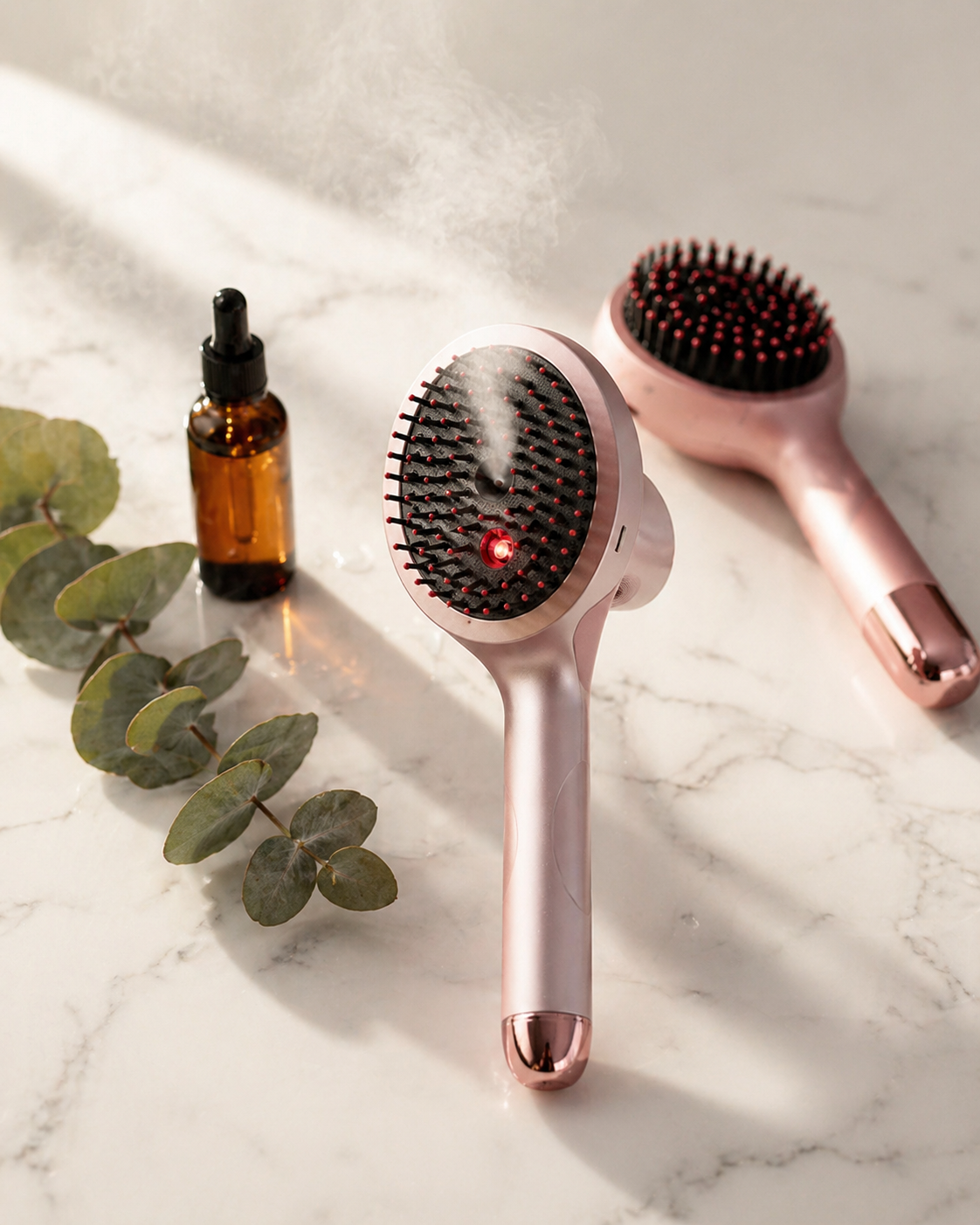
Your routine may be too heavy, or you may be layering products without giving the scalp room to breathe. Focus on thorough cleansing, keep conditioner to the mid-lengths and ends, and add a weekly reset. Light-based tools like the Rootli Glow Comb Dual-Light Scalp Brush fit neatly into an evening routine as part of daily scalp care.
If your scalp feels dry, tight, or uncomfortable
This is where serum-led care shines. A lightweight serum applied directly to the scalp and massaged in can help the whole area feel more balanced. The Rootli Serum Comb Serum-Infusing Scalp Massage Brush helps distribute serum evenly while you massage, and the Rootli Serum Lab is built around serum-first scalp nourishment if you want to go deeper.
If tension and tightness are your main finding
Add a few minutes of massage to your week. The Rootli Stone Comb – Scalp Gua Sha is a lovely five-minute ritual and works beautifully as pre-serum prep, while the Root Sculptor Premium Pink Scalp Comb brings a gemstone gua sha feel to the same idea. If you like warmth, the Rootli Cap turns a weekly warm scalp spa moment into something you look forward to.
If you simply want a more intentional routine
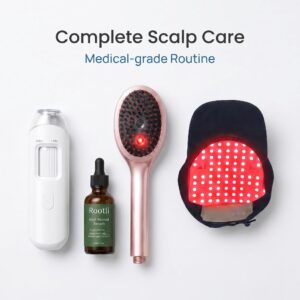
Start small and tactile. The Natural Ritual Set is a gentle, hands-on introduction to scalp care, and the Glow Detection Set pairs checking your scalp’s condition with building a more deliberate routine. If light-based care appeals to you, the Rootli Pulse Pro – LED Light Cap offers hands-free red and blue light scalp care, while the LED Power Duo combines full-scalp LED coverage with targeted comb care.
When to Bring in a Professional
Scalp analysis at home is a beauty habit, not a medical assessment. If you notice sudden changes, patches of hair that look noticeably different, persistent pain, bleeding, or irritation that does not settle, that is a signal to see a dermatologist or physician rather than adjust your routine again. There is no shame in it, and no tool replaces a professional opinion.
For everyday scalp care, though, your own observations are genuinely valuable, and often more useful than a generic product recommendation, because they are about your scalp.
A Gentle Place to Start
If you are new to this, do not build a ten-step regimen. Pick one tool that helps you see, one that helps you massage, and one serum you enjoy using. Take your first set of photos this week. Write three words. Then let the routine stay small and consistent for two months before you change anything.
That is the whole idea behind scalp-first care: the scalp deserves the same curiosity and attention we give our faces. Start with a look, and let what you see guide the rest. If you would like a starting point, the Glow Detection Set pairs scalp checking with a more intentional routine.