Most of us can tell within seconds whether our skin feels dry, calm, or a little reactive. Our scalp rarely gets the same attention, even though it is skin too, and often the first place we notice buildup, tightness, or flaking we cannot quite explain. That is where scalp analysis at home comes in. Not a diagnosis, not a clinical procedure, just a thoughtful and repeatable way to look at your scalp, notice patterns, and choose products that match what you are actually seeing.
Think of it like the mirror check you already do before applying serum to your face. Once you know how to do it, scalp analysis at home takes about five minutes, and it turns your haircare from guesswork into a genuine ritual. Here is how to check in with your scalp, track before-and-after progress honestly, and build a routine that supports a comfortable, balanced-feeling scalp and healthy-looking hair over time.
Why Scalp Analysis at Home Is the Step Most Routines Skip
Most people build a hair routine backwards. They start with the product, then hope it fits. A shampoo recommended by a friend, a serum that went viral, a mask that smelled incredible in the store. Weeks later, they still cannot say whether any of it helped, because they never established a baseline.
Scalp analysis at home flips that order. Instead of guessing, you look first. You get a sense of what your scalp tends to do in different seasons, how it responds to washing frequency, and whether the products you love are actually supporting the scalp you have.
It also makes your routine more intentional. When you know your scalp leans oily at the roots by day two, or feels tight after certain shampoos, you stop buying products for the scalp you wish you had and start choosing for the one in front of you. That is the whole point of a scalp-first approach: the scalp deserves as much care as the face.
Shop the scalp ritual
-
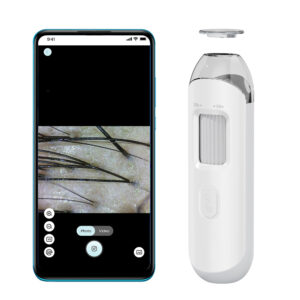
Rootli Scope AI-Connected Scalp & Follicle Analyzer
Price range: $158.00 through $178.00 Select options This product has multiple variants. The options may be chosen on the product page -
How to Do a Scalp Analysis at Home in Five Minutes
A good at-home scalp analysis is less about tools and more about consistency. You are not looking for a dramatic reveal. You are looking for a pattern you can compare against next month.
Start with clean, dry, product-free hair
The clearest view comes right after washing and air drying, before you apply serums, oils, or styling products. Anything you add afterward changes how the scalp looks, so keep your check-in early in the routine when possible. If you always check on wash day, you create a fair comparison from one month to the next.
Photograph the same four zones every time
Pick four spots and commit to them: the front hairline, the part line, the crown, and one spot above each ear. Take one photo per zone in the same lighting, at the same distance, on the same day of your wash cycle. Natural daylight near a window works beautifully and shows texture most honestly.
- Part your hair in the same place each time so the same area is visible.
- Use your phone’s rear camera for sharper detail and steadier focus.
- Skip the ring light, which can wash out texture and make comparison harder.
- Name your photos by date so your before-and-after set stays organized.
Note how it feels, not just how it looks
Photos tell part of the story. Sensation tells the rest. After you photograph, take thirty seconds to notice: does the scalp feel comfortable, tight, itchy, or warm? Does it feel balanced a day after washing, or noticeably oily by evening? Jot a few words in your phone. Over time, those notes become more useful than any single image.
If you want a closer look at what you are seeing, the Rootli Scope AI-Connected Scalp & Follicle Analyzer gives you magnified visibility of the scalp and follicles so your monthly check-in has real detail behind it. And if you would rather start with guidance before choosing products, the Rootli Diagnostic Pro is designed to help you understand your scalp before committing to a ritual.
Before-and-After Tracking That Actually Shows Something
The biggest mistake people make with before-and-after tracking is comparing photos taken in different lighting, on different days, from different angles, then feeling confused when the results look inconsistent. The second biggest mistake is checking every single day and driving themselves a little bit crazy.
Give yourself a two-week baseline first
Before you change a single product, spend two weeks just observing. Wash as usual. Photograph on your normal schedule. Write your notes. This baseline is the reference point for everything that comes next, and it makes future comparisons far more meaningful than a photo you happened to take on a random Tuesday.
Then check in monthly, not daily
Scalp conditions shift gradually, and daily photos amplify normal variation into false drama. A monthly cadence is calm, sustainable, and clear. Same lighting, same four zones, same day of your wash cycle. Then place the newest set beside the oldest and look for direction rather than perfection.
What progress usually looks like
Progress is often quieter than people expect. It might look like less visible buildup along the part line. A scalp that feels comfortable a day longer between washes. Less tightness after cleansing. Hair that appears glossier or sits more smoothly at the roots. None of these are dramatic, but together they tell you your routine is moving in the right direction.
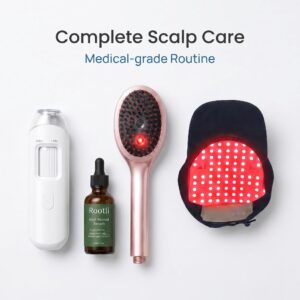
If your check-ins feel more useful when you can compare texture and tone side by side, the The Glow Detection Set was built around exactly that idea: checking scalp condition and building a more intentional routine from what you find.
Reading What You See Without Jumping to Conclusions
Here is the honest part: a phone photo cannot tell you why your scalp behaves the way it does. What it can do is help you notice, describe, and track. If something looks or feels persistently unusual, painful, or is changing quickly, that is a conversation for a dermatologist or healthcare provider, not a beauty article.
For everyday observations, though, a few gentle interpretations can help you choose better products:
- Visible buildup near the roots by day two: your scalp may simply prefer a lighter cleansing routine or a more frequent wash cadence.
- Tightness or a dry, squeaky feeling after washing: your cleanser may be doing more stripping than your scalp enjoys.
- Flaking that comes and goes with the seasons: worth noting in your log so you can see whether it tracks with weather, stress, or product changes.
- Product residue along the part line: a sign that your leave-in layers may need a lighter hand or better distribution.
- A scalp that feels tender in one spot: note it, avoid aggressive tools there, and mention it to a professional if it persists.
Once you know what you are looking at, the routine almost writes itself. Buildup-prone scalps often love a weekly reset and a serum that absorbs quickly. Dry-feeling scalps tend to respond well to massage, gentle warmth, and nourishing formulas applied with intention rather than volume.
Building a Routine Around What Your Scalp Analysis Reveals
Your check-in is only valuable if it changes what you do next. So match your observations to a ritual you will actually keep, rather than a shelf of half-used bottles.
If distribution is your weak spot, the Rootli Serum Comb Serum-Infusing Scalp Massage Brush massages and spreads serum evenly through the scalp, which makes your check-ins more consistent because your products land where you intend. For daily lightweight care, Rootli Serum is an easy step to layer into a five-minute evening ritual.
If your scalp tends to feel tired and tight, a warm weekly reset can be lovely. The Rootli Cap is designed for weekly warm scalp spa rituals, and pairing it with a slow two-minute massage using the Rootli Stone Comb – Scalp Gua Sha turns your before-and-after photos into part of a ritual you look forward to.
And if light-based routines appeal to you, the Rootli Pulse Pro – LED Light Cap offers hands-free red and blue light scalp care, while the The LED Power Duo combines full-scalp LED coverage with targeted comb care. Whatever you choose, give it a full eight to twelve weeks before you judge it against your baseline. Consistency is what makes before-and-after tracking meaningful in the first place.
Make It a Ritual, Not a Report Card
Scalp analysis at home works best when it feels kind. It is not about finding flaws in your scalp. It is about paying attention, the same way you would notice that your skin feels thirsty in winter and swap in a richer moisturizer without a second thought.
So pick one day a month. Take your four photos. Write two sentences about how your scalp feels. Then choose one small thing to adjust, whether that is a gentler cleanse, a slower massage, or a serum applied with a little more care. Repeat. That is the entire method, and it is surprisingly powerful over a few seasons.
If you are ready to see your scalp more clearly, start with the Rootli Scope AI-Connected Scalp & Follicle Analyzer or let the Rootli Diagnostic Pro guide your first ritual. Your scalp has been waiting for the same attention you give your face. This month is a beautiful time to begin.