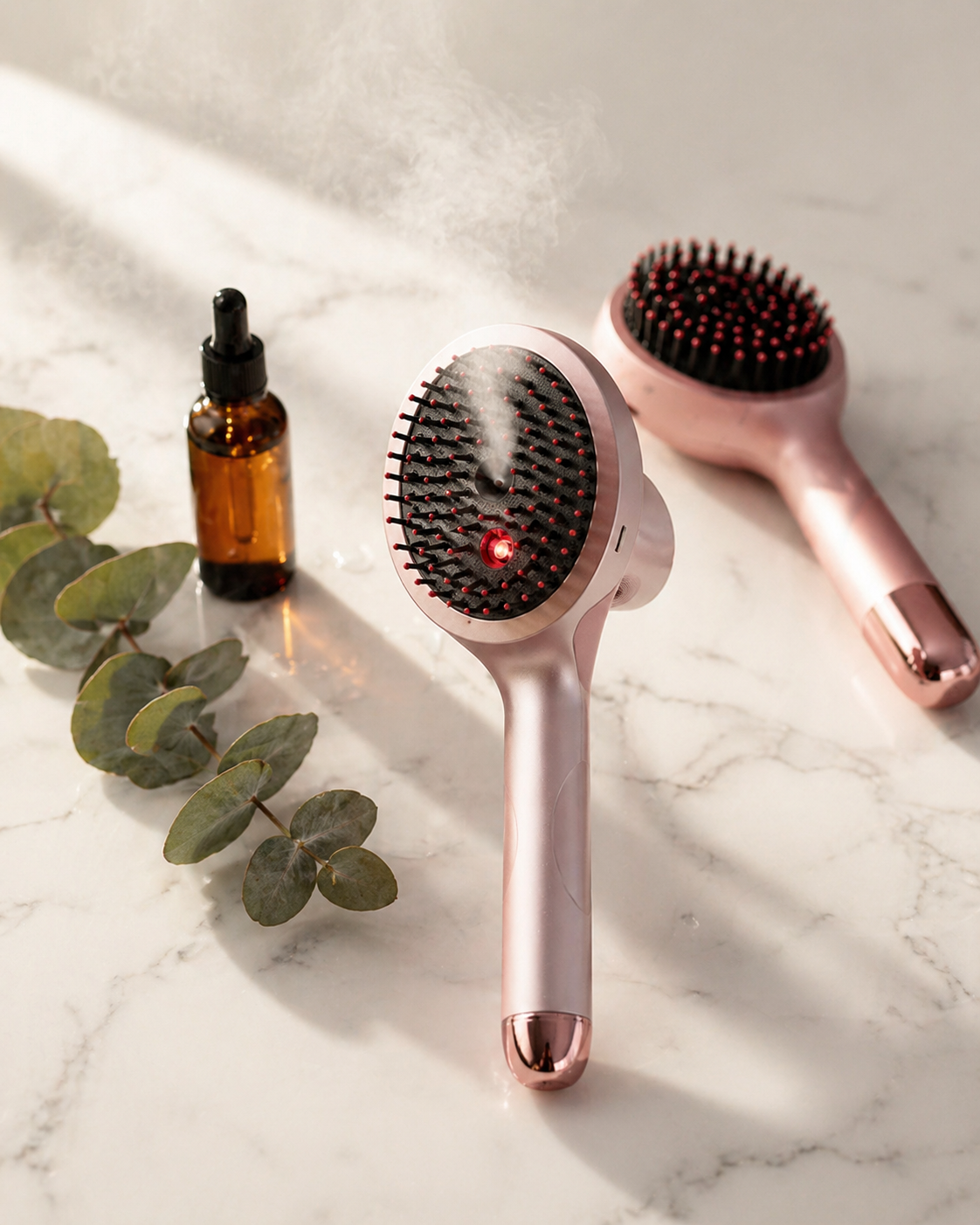
Most of us have learned to read our faces. We can tell when our skin is thirsty, when it is congested, when it needs a night off from actives. The scalp rarely gets that same attention. It tends to make itself known only when something already feels off: a tight feeling by mid-afternoon, flakes near the hairline, a ponytail that sits differently than it did last year.
Scalp analysis is simply the practice of looking before you treat. Instead of guessing which shampoo, serum, or device your scalp wants this month, you gather a little information first — a photo, a close look, a quick note about how it feels — and let that guide the ritual. It is the difference between buying products hopefully and building a routine intentionally. And the best part is that you can do it at home, in about five minutes a week, with the phone already in your hand.
What At-Home Scalp Analysis Can Actually Show You
Scalp analysis at home is not about diagnosing anything. It is a beauty observation practice, the same way you might notice your skin looks duller after a stressful month and adjust your routine accordingly. What you are collecting is pattern information: how your scalp looks and feels over time, in different seasons, under different routines.
That distinction matters, because it keeps the whole exercise light. You are not hunting for a problem. You are building a reference point, so that when something does change, you actually notice it instead of wondering whether it was always that way.
It is a check-in, not a diagnosis
Nothing you see in a magnified photo or a bathroom mirror is a medical finding, and it is not meant to replace professional advice. If you are dealing with persistent discomfort, sudden changes, or anything that genuinely worries you, that is a conversation for a doctor or dermatologist. What at-home scalp analysis gives you is context: a clearer, more honest picture of your scalp’s everyday baseline, so your product choices make more sense and your routine feels less like trial and error.
What is actually worth looking at
When you zoom in on your scalp — literally — a few things become visible that are easy to miss at arm’s length:
- Comfort. Does the scalp feel tight, tingly, or calm? Comfort is one of the most useful signals you have, and it costs nothing to track.
- Visible buildup. Product residue, oil, and flaking around the part and hairline often show up in photos before they show up in how your hair behaves.
- Redness or reactivity. Some scalps flush easily. Knowing whether that is your normal helps you avoid overreacting to it later.
- Density and part width. Photographing the same part line every month gives you a reference point for how your hair looks and falls over time.
- Where your scalp is dry versus oily. Plenty of people are both, in different zones — often oilier at the crown and drier along the hairline.
If you want more detail than a phone camera can offer, a tool like the Rootli Scope AI-Connected Scalp & Follicle Analyzer gives you a magnified view of the scalp surface and follicles so you can compare month to month instead of relying on memory. And if you would rather start with structure than hardware, The Rootli Diagnostic Pro is designed to help you understand your scalp before you commit to a ritual.
Shop the scalp ritual
-
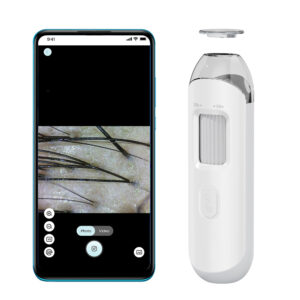
Rootli Scope AI-Connected Scalp & Follicle Analyzer
Price range: $158.00 through $178.00 Select options This product has multiple variants. The options may be chosen on the product page -

How to Set Up a Before-and-After Scalp Tracking Ritual
The difference between a vague sense that things are maybe better and genuine confidence is consistency. Set the conditions once, then repeat them. Before-and-after scalp tracking works the same way a good skincare diary does: same light, same angle, same timing, month after month.
The five-minute baseline
Pick one day — a Sunday evening works well — and do the same thing every time:
- Photograph your scalp in the same room, under the same light, with your hair parted in the same three places: center, left, right.
- Take one photo dry, before washing, and one after your hair is completely dry.
- Note how your scalp feels right now. Tight, oily, sensitive, comfortable?
- Write one sentence about anything you changed that week — a new shampoo, more heat styling, a stressful stretch at work.
Keep the variables boring
Before-and-after scalp photos are only useful if the before and the after are comparable. Lighting matters more than you would think: bright overhead light can make a perfectly normal scalp look flaky, while warm bathroom bulbs can hide redness entirely. Natural daylight near a window is the most honest option. Skip the flash. And try not to take your after photo the day you used a clarifying treatment — that is not your baseline, that is your best-case scenario.
Angles matter too. A photo taken from directly above your part tells you something different than one taken at the hairline. Pick your angles once and stick with them, even the unflattering ones. Those are the ones that actually show change.
Re-check monthly, not daily
Scalp changes are slow. Checking every single day invites overthinking and overcorrecting, which is the opposite of what a calm scalp wants. A monthly re-check, with a quick weekly note in between, gives you a rhythm that stays informative without becoming obsessive.
Translating What You See Into a Routine
This is where scalp analysis earns its keep. Once you know what your scalp tends to do, product decisions stop being a coin flip. Here is how a few common patterns might shape your routine.
If your scalp feels tight or squeaky-clean
Tightness after washing often points to a routine that is a little too stripping. Consider spacing out clarifying washes and adding a gentle, serum-led step. Something like The Rootli Serum Lab keeps things simple: a small, consistent dose of scalp nourishment rather than a shelf full of new products. If you prefer something lighter for daily use, Rootli Serum is made to layer in without weight.
If it feels oily or heavy by evening
That is usually a sign to focus on massage and even distribution rather than more product. A Rootli Serum Comb Serum-Infusing Scalp Massage Brush helps you work product through the scalp instead of concentrating it at the roots, and the massaging motion itself feels genuinely good — which counts for something in a routine you want to keep.
If it is sensitive or reactive
Go tactile and low-tech. The Natural Ritual Set is built around gentle, hands-on care, and a five-minute pass with the Rootli Stone Comb – Scalp Gua Sha is an easy, calming way to prep the scalp before anything else touches it. When a scalp is easily reactive, fewer steps and slower hands usually beat a bigger lineup.
If your hair looks flatter than you would like
Volume is often a scalp story. Regular scalp massage and light-based routines can support a comfortable, balanced-feeling scalp, which is the foundation for hair that looks fuller and sits better. Tools like the Rootli Glow Comb Dual-Light Scalp Brush fold that into brushing, so it is not an extra step in your day. For hands-free sessions, the Rootli Pulse Pro – LED Light Cap lets you run a light ritual while you answer emails.
What Progress Actually Looks Like
Here is the honest part: real scalp progress is rarely dramatic, and that is a good thing. It looks like a scalp that feels comfortable more days than not. A part line that photographs consistently from month to month. Less visible buildup in your before-wash photo than there was three months ago. Hair that falls the way you want it to more often.
This is exactly why tracking beats memory. Without a baseline, you will forget what week one looked like, and you will either underrate your progress or chase a problem that has already resolved itself. With a baseline, you can see that the changes you made — a gentler wash, a few extra minutes of massage, a more consistent serum habit — are doing something.
A few things worth writing down each month:
- Overall scalp comfort, on a simple one-to-five scale.
- Whether flaking or buildup looks better, worse, or the same in your photos.
- How your hair looks on day two after washing, not just day one.
- Anything you changed, so cause and effect stay connected.
Seasonal shifts are worth noting too. Many people find their scalp feels different in winter heating than in summer humidity, and that is not a setback — it is just useful information for adjusting how much moisture your routine delivers.
Start With One Honest Look
You do not need a full setup to begin. You need one photo, one note, and a willingness to look closely at a part of your body that usually gets ignored. Scalp analysis is not about finding something wrong. It is about knowing your scalp well enough to care for it on purpose.
Start there, and let your routine grow around what you learn. If you want a clearer view to work from, the Rootli Scope AI-Connected Scalp & Follicle Analyzer and The Rootli Diagnostic Pro are both designed to make that first look more informative. Take the photo. Make the note. Your scalp has been waiting for the same attention your skin already gets — and it is a habit that takes five minutes to begin.