Most of us know our skin better than we know our scalp. We can describe our forehead’s oiliness by mid-afternoon, the dry patch that shows up every February, the exact moment a breakout starts. Our scalp, meanwhile, tends to get attention only when something feels off — an itch, a flake, a ponytail that sits differently than it used to. Scalp analysis at home is simply the practice of closing that gap: looking at your scalp on purpose, tracking what you see over time, and letting those observations shape a routine that actually fits you.
It isn’t about diagnosing anything or chasing a perfect head of hair. It’s a beauty habit — closer to taking a monthly mirror photo of your skin or noting how a new serum wears under makeup. When you understand your scalp’s patterns, you stop guessing at products and start choosing them with intention.
Why Scalp Analysis Deserves a Place in Your Beauty Routine
Your scalp is skin — thinner in places, denser in follicles, but skin all the same. It has its own oil balance, its own response to weather, stress, and the products you layer on it. The trouble is that it’s covered by hair, which makes it easy to ignore until a pattern has already settled in.
Scalp analysis at home flips that order. Instead of reacting to a bad week, you build a small record of what’s normal for you. That record does a few useful things:
- It separates a one-off (travel, a new dry shampoo, a heatwave) from something that shows up month after month.
- It gives you a baseline, so you can tell whether a new product is actually making your scalp feel more comfortable.
- It turns vague words like my hair feels thinner into something more specific — where, how much, since when.
- It makes your routine feel intentional rather than a shelf of half-used bottles.
None of this requires a clinic. It requires good light, a camera, and five quiet minutes.
Shop the scalp ritual
-
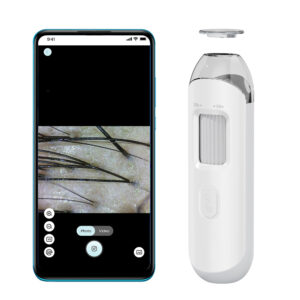
Rootli Scope AI-Connected Scalp & Follicle Analyzer
Price range: $158.00 through $178.00 Select options This product has multiple variants. The options may be chosen on the product page -
How to Do a Scalp Analysis at Home Without Overthinking It
The most common mistake is treating it like an exam. You’re not grading yourself. You’re gathering impressions — and impressions, repeated monthly, become a pattern.
Start With What You Can See and Feel
Part your hair in four places: down the middle, then a line on each side toward the ear. In good light, note a few things. Is the scalp visible along the part? Does the skin look pink, calm, or a little irritated? Is there visible flaking at the hairline? Then use your fingertips to feel for oiliness at the crown, tightness at the temples, and any tender spots.
Write down three words that describe it. Oily at the crown, calm elsewhere. Dry and tight after washing. Itchy by evening. Those three words are already more useful than most product quizzes you’ve taken.
Use a Tool When You Want More Detail
Fingertips and daylight get you surprisingly far, but if you want a closer, more comparable view over time, a dedicated tool helps. The Rootli Scope AI-Connected Scalp & Follicle Analyzer gives you a magnified look at the scalp surface and follicle area, so you can compare what you see from one month to the next instead of relying on memory.
If you would rather start with structure than hardware, The Rootli Diagnostic Pro is built around understanding your scalp first and choosing a ritual second — a useful order of operations if you’ve been buying products reactively. And if you like the idea of pairing observation with a routine from day one, The Glow Detection Set brings scalp checking together with the beginnings of a more intentional practice.
Keep It Short and Repeatable
A five-minute check once a month beats a 45-minute deep dive you never repeat. Set a reminder for the same day each month — ideally the day before wash day, when your scalp is at its most typical rather than freshly cleansed or three days into oil.
Before-and-After Tracking: What to Photograph and How Often
Photos are the honest part. Memory smooths things over — you’ll forget what your part looked like in March. Images don’t.
Setting Up Photos That Actually Compare
- Same light, same spot. Indirect daylight near a window works well; overhead bathroom bulbs cast shadows across the part.
- Same hair state. Dry and unstyled, before washing, is the easiest to repeat.
- Same angles. One shot of the front hairline, one of the crown, one of the part, one side view.
- Same distance. Prop your phone on a shelf or use a timer so the framing doesn’t drift.
- Label the date. A folder named scalp, with dated files, takes seconds and saves confusion later.
Take photos monthly, not weekly. Hair and scalp change slowly, and weekly images mostly show you differences in lighting and posture. Monthly gives you a rhythm you can actually read.
What to Track Alongside the Photos
Images tell you how things look. Notes tell you why they might. Alongside each photo, jot down a few basics:
- Wash day frequency and what you used.
- Any new product, tool, or routine change that month.
- Scalp feel — comfortable, tight, oily, sensitive.
- How your hair looked styled: flatter, more volume at the root, easier to detangle.
- Life context: travel, season change, a stressful stretch, a new workout schedule.
This is the difference between a photo album and real before-and-after tracking. Six months in, you’ll be able to see whether the changes you made lined up with the changes you felt.
What Your Scalp Observations Might Be Pointing To
Beauty writing likes to promise clarity, but honesty is more useful: your notes won’t hand you a label. What they will do is show patterns, and patterns are what guide your next choice.
If your scalp reads oily at the crown within a day of washing, your routine may simply be too heavy at the root — rich conditioners, oil-based stylers, or a serum applied too generously. If it feels tight and dry after cleansing, you may be over-washing or using something too stripping. If sensitivity comes and goes, look at what changed that month: a new dry shampoo, a heat tool used closer to the root, a seasonal shift in humidity.
And if something looks or feels genuinely unusual — persistent irritation, sudden changes, discomfort that doesn’t settle — that’s a conversation for a dermatologist, not a blog post or a device. At-home scalp analysis is a beauty habit for understanding your normal. It isn’t a substitute for professional care.
Turning What You Learn Into a Scalp-First Routine
Once you know your pattern, the routine almost writes itself. A few ways to build it:
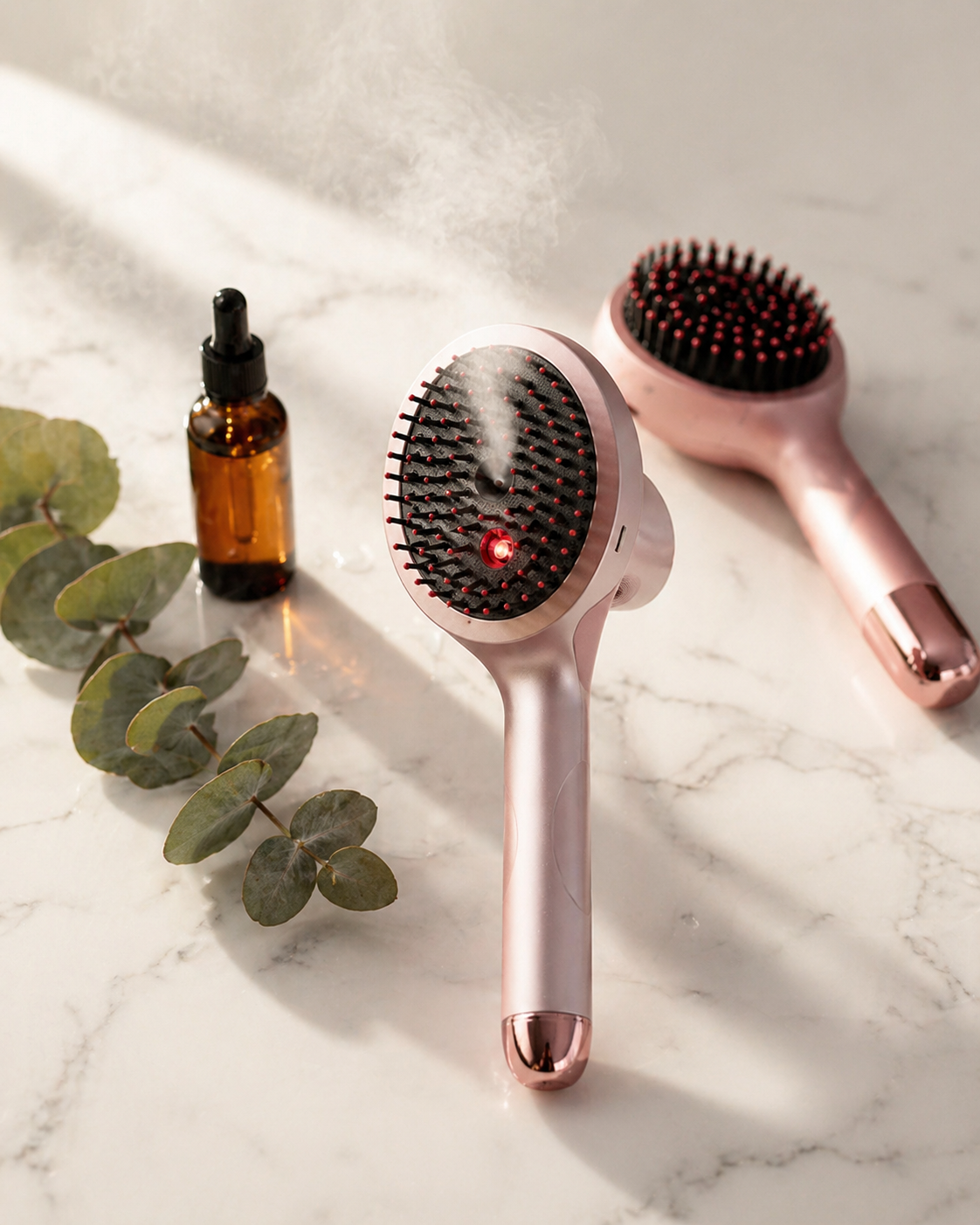
If your scalp leans oily or product-heavy: keep the root light. A lightweight serum applied to the scalp rather than the lengths, like Rootli Serum, works best when it’s spread evenly instead of dropped in one spot. The Rootli Serum Comb Serum-Infusing Scalp Massage Brush is made for exactly that — working product through the scalp while you massage.
If your scalp feels dry or tight: slow down and add touch. A five-minute session with the Rootli Stone Comb – Scalp Gua Sha is a gentle way to prep the scalp before serum, and the Mist Hair Comb: Vibrating Scalp Massager pairs a fine mist with vibration, which many people find soothing on a dry-feeling scalp.
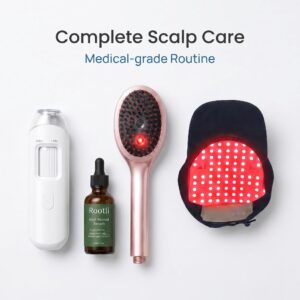
If you want one weekly ritual to anchor the month: the Rootli Cap is designed for warm scalp spa sessions at home, while The LED Power Duo pairs full-scalp light coverage with targeted comb care for a more structured session. Prefer hands-free? The Rootli Pulse Pro – LED Light Cap lets you wear your routine while you get on with your evening.
If you want one device that does several things: the Rootli Wand Pro 4-in-1 Smart Beauty & Scalp combines light, massage, and serum-assisted care in a single tool, which suits anyone whose main barrier is having too many steps. And if serum-led care is the direction you’re drawn to, The Rootli Serum Lab puts nourishment at the center of the ritual.
Start With One Honest Look at Your Scalp
You don’t need a full setup to begin. Pick one day this month, stand near a window, part your hair in four places, and take four photos. Write three words. That’s scalp analysis at home in its simplest form — and it’s enough to start.
From there, add one tool and one ritual, then compare next month and let the record tell you what your scalp likes. If you’d like a starting point that pairs observation with care, the Rootli Scope AI-Connected Scalp & Follicle Analyzer and The Rootli Diagnostic Pro are both designed to help you understand your scalp before you commit to a routine — because the best scalp care isn’t the most products, it’s the right ones, chosen with your own scalp in mind.