Scalp serum ingredients have quietly become the most-searched part of the haircare aisle. You see caffeine on a dropper bottle, Redensyl and Procapil on the back of a sleek carton, and the words lightweight leave-in on almost everything. If you’ve ever stood in a store wondering which of these bottles actually belongs in your routine, you’re in very good company.
Here’s the honest version: a scalp serum is a cosmetic product, not a medical one, and the ingredients inside it work in gentle, cumulative ways. What they can do is help your scalp feel comfortable and balanced, support a routine you’ll actually keep up with, and help hair look glossier and fuller over time. What they can’t do is promise a transformation overnight. So let’s walk through the four things people search for most — caffeine, Redensyl, Procapil, and lightweight leave-in formulas — and talk about how each one fits into a real routine.
What Scalp Serum Ingredients Are Actually Doing for Your Scalp
A scalp serum is a leave-on cosmetic product designed to be applied directly to the skin of your scalp, usually with a dropper, a comb applicator, or a massaging tip. Because it stays there until your next wash, the formula is in contact with your scalp for hours — which is exactly why the ingredient list deserves a closer look than a rinse-out shampoo gets.
Your scalp is skin. It has a barrier, a microbiome, sebaceous glands, and its own version of a moisture balance. When that environment feels comfortable and calm, hair tends to look shinier, sits better, and styles more easily. Most scalp serum ingredients are chosen with that environment in mind: humectants to keep things feeling hydrated, antioxidants to help defend against everyday environmental stress, and soothing botanicals that make the whole experience pleasant enough to repeat.
Worth saying plainly: these are cosmetic formulas, not medical treatments. They aren’t designed to diagnose or address a medical condition, and if you’re dealing with sudden shedding, itching, pain, or patchy areas, a dermatologist is the right first stop. What a serum can do is support scalp health as part of a beauty ritual — and that’s a meaningful thing in its own right.
Shop the scalp ritual
-
Sale!
Rootli Serum Comb Serum-Infusing Scalp Massage Brush
Original price was: $198.00.$178.00Current price is: $178.00. Select options This product has multiple variants. The options may be chosen on the product page -
Caffeine in Scalp Serums: Why It Shows Up in So Many Formulas
Open almost any scalp serum and there’s a decent chance caffeine is on the label. It’s inexpensive, stable, and easy to formulate with, which explains its popularity — but it also has genuine cosmetic appeal.
What caffeine brings to a leave-in formula
Caffeine is an antioxidant, and in skincare it’s often used to help skin feel more awake and less puffy. On the scalp, formulators reach for it for much the same reason: it gives the skin a refreshed, energized sensation and helps the formula feel like it’s doing something the moment you apply it. Some brands also position caffeine as supporting hair that looks thicker and fuller, though the research behind those claims is still developing and largely comes from the ingredient suppliers themselves.
Who caffeine suits best
Caffeine tends to be a good fit if you like a serum that feels brisk and light rather than rich and balmy — think morning routine, cool application, quick absorption. If your scalp is reactive or easily irritated, though, it’s worth patch testing first, since any active-feeling ingredient can be too much for a sensitized scalp.
Redensyl and Procapil: The Two Cosmetic Complexes People Ask About Most
These two names come up constantly in scalp serum searches, and they’re often mentioned together. Both are trade-name blends rather than single ingredients, which is why they sound a little more like brands than chemicals.
Redensyl
Redensyl is a plant-derived complex, typically built around molecules found in larch wood and green tea. Brands describe it as supporting hair that looks denser and fuller, and it’s usually included at low percentages in lightweight, water-based serums. It plays nicely with other ingredients, which is part of why it appears in so many formulas.
Procapil
Procapil is another blend — this one usually combining a biotin-derived peptide with plant compounds such as oleanolic acid and apigenin. In cosmetic use, it’s positioned around helping hair look thicker and supporting a comfortable scalp environment. Like Redensyl, it’s a cosmetic ingredient rather than a medicine, and the published research around it is still evolving.
A quick note on how to hold all of this: ingredient makers run their own studies, and those studies are usually small. That doesn’t make the ingredients useless — it just means the honest framing is may support the look of fuller hair rather than a certainty nobody can truthfully offer.
What these two complexes have in common:
- They’re multi-ingredient blends, not single molecules
- They’re typically used at low percentages in water-based serums
- They’re cosmetic ingredients, not treatments for any condition
- They tend to work best as part of a consistent routine rather than a one-off
Lightweight Leave-In Formulas: The Part of the Ingredient List You Feel
Texture is where most scalp serums win or lose you. A formula can have a beautiful ingredient list and still end up abandoned on the shelf because it left your roots greasy, weighed down fine hair, or made your scalp feel tacky by mid-afternoon.
Lightweight and leave-in are both doing real work in that sentence. Leave-in means the product stays on your scalp until your next wash, so anything heavy — thick oils, rich butters, a high load of silicone — has hours to build up. On fine or lower-density hair, that buildup shows up fast as flatness at the roots. If you wash every few days, it can turn into a congested, itchy feeling instead.
What to look for instead: water-first formulas, humectants like glycerin or panthenol that feel hydrating without weight, and light emollients that absorb rather than sit on top. A simple test is to apply a few drops along your part and check in two hours later, not thirty seconds later. How your scalp feels at the end of the day is the real review.
How to Read a Scalp Serum Ingredient List Without Overthinking It
You don’t need a chemistry degree. A few quick checks will tell you most of what you need to know.
- Water or aloe first. If the first ingredient is water or aloe juice, you’re likely looking at a light, fast-absorbing formula.
- Actives in the middle. Caffeine, Redensyl, Procapil, niacinamide, and peptides usually appear after the base — that’s normal, not a red flag.
- Soothing support. Panthenol, allantoin, bisabolol, and green tea are signs the formula is thinking about comfort, not just performance.
- Fragrance and essential oils. Fine for most people, but if your scalp runs sensitive, these are the usual suspects. Patch test on your inner forearm first.
- Consistency over intensity. A gentle serum you use three times a week beats a strong one you use once and then avoid.
Where These Ingredients Fit in a Real Scalp Care Ritual
Ingredients only matter if the routine around them holds up. The nice thing about a serum-led ritual is that it’s short: apply, massage, move on with your morning.
Start with a clean, dry or towel-dried scalp, since a leave-in serum applied over heavy product buildup won’t do much for how your scalp feels. Part your hair in a few rows and place a few drops along each one. Then spend two to three minutes massaging with your fingertips or a tool — this is the part where the routine starts to feel less like a task and more like a small luxury.
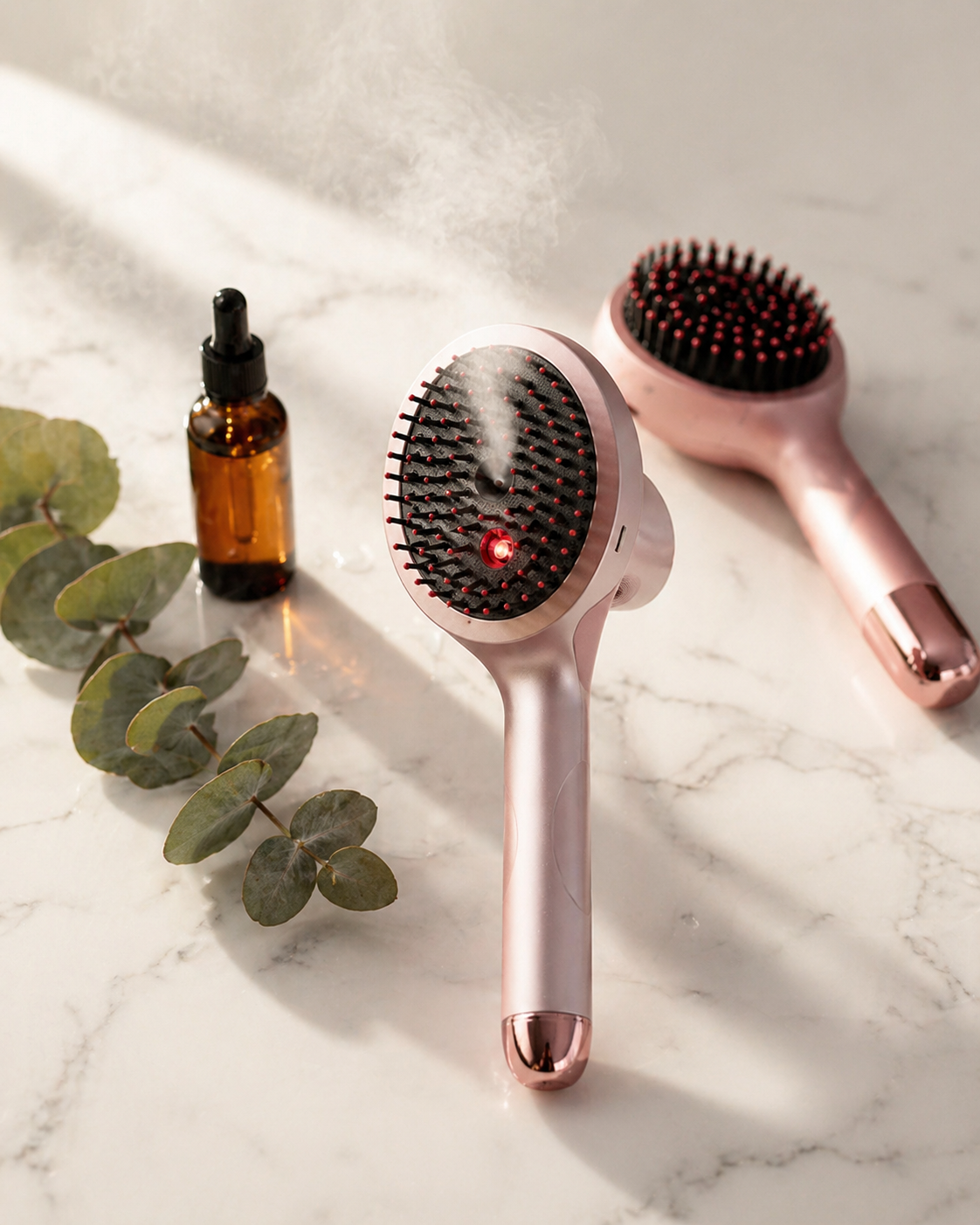
If you’d like the massage and the serum application in one step, the Rootli Serum Comb Serum-Infusing Scalp Massage Brush is built for exactly that: combing and massaging at once so the formula spreads evenly instead of pooling in one spot. And if you’d rather build the whole ritual around serums, The Rootli Serum Lab is a serum-led setup designed for scalp nourishment.
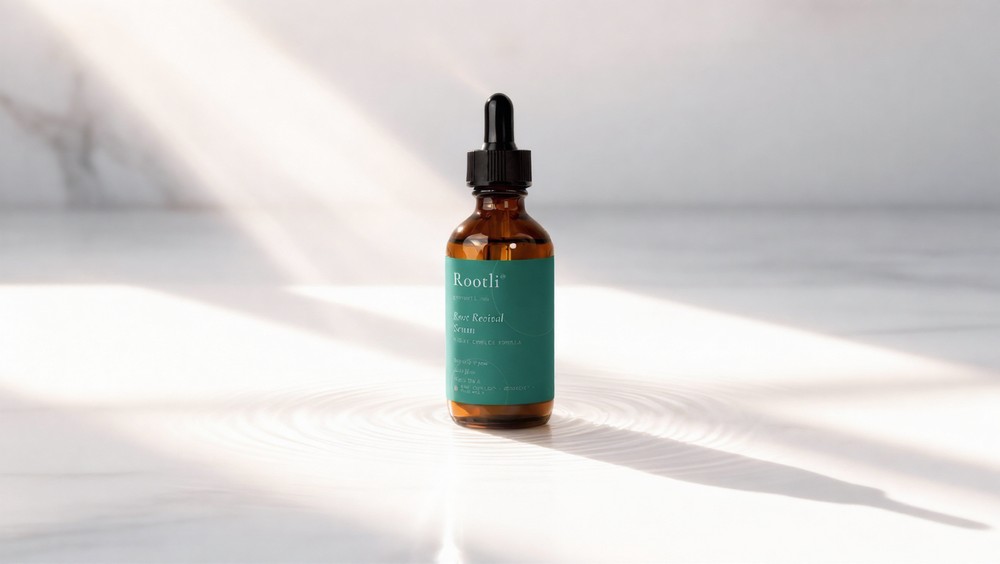
Once a week, add a little more intention. Warmth, a slow massage, and a few extra minutes can turn a quick application into a proper scalp spa moment. If you like knowing what you’re working with before you choose a formula, the Rootli Scope AI-Connected Scalp & Follicle Analyzer offers a closer look at your scalp and follicles, which can make your product choices feel a lot less like guesswork. For a daily lightweight option, Rootli Serum is made to slot into a simple morning or evening routine.
The Ingredients Are the Beginning, Not the Whole Story
Scalp serum ingredients are worth understanding, and caffeine, Redensyl, Procapil, and lightweight leave-in bases are four of the most common names you’ll meet along the way. But the real difference between a routine that works and one that doesn’t usually comes down to repetition, comfort, and a formula your scalp actually likes.
So read the labels, yes — then choose something you’ll enjoy using three times a week. Start with one product, keep it simple, and give it a season. Healthy-looking hair is rarely the result of a single bottle; it’s the result of a small habit you kept.
Ready to build yours? The Rootli Serum Lab and the Rootli Serum Comb Serum-Infusing Scalp Massage Brush are a gentle, welcoming place to start.