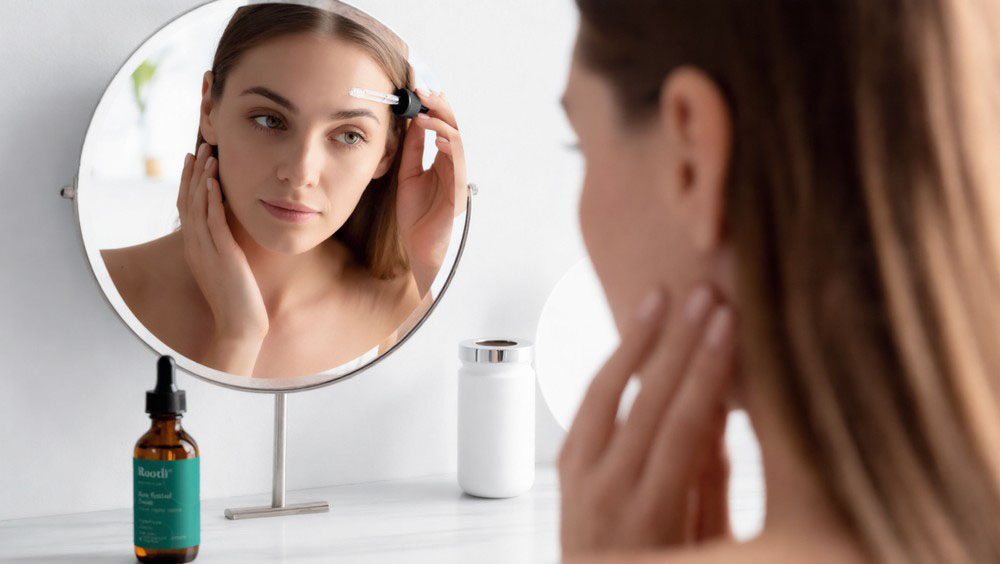
Some scalps announce themselves quietly. You notice it in the mirror when your hairline looks a little dull. You notice it at your desk when your scalp feels tight, almost as if it’s been pulled back too long. You notice it on a black sweater, where a few pale flakes seem to appear out of nowhere. None of this means something is wrong with you. It usually means your scalp is asking for a gentler, more consistent kind of care — the same care you’d give the skin on your face without thinking twice.
That’s the whole idea behind a dry scalp routine that actually holds up: less stripping, more comfort, and a few small rituals you’ll genuinely look forward to. This is scalp care as beauty care, not a chore and not a clinical checklist.
Why Your Scalp Feels Dry and Tight (and What It’s Really Asking For)
The skin on your scalp is skin. It just happens to be covered in hair, which makes it easy to ignore until it complains. It’s delicate, it has a dense network of oil glands, and it’s constantly exposed to everything we do to our hair: hot water, strong shampoos, dry indoor heating, tight ponytails, and styling tools that get a little too close to the roots.
When your scalp feels tight, that sensation is usually a sign it’s been stripped or dehydrated. When it feels flaky, it can be a mix of dryness, product buildup, or simply skin shedding the way skin does. None of that is a crisis. It’s feedback — and feedback is useful.
What makes a dry scalp routine different from a hair routine is where you aim it. Most of us pour our energy into the ends — masks, oils, heat protection — while the roots get whatever’s left over. Flipping that order changes how your scalp feels within a week or two, and it costs you almost nothing.
Two things worth knowing before you start
First, flaking has many possible causes, and some of them are medical rather than cosmetic. If your scalp is persistently itchy, painful, raw, or covered in thick patches, that’s a conversation for a dermatologist, not a blog post — and there’s no shame in having it.
Second, more is not better. A lot of dry-feeling scalps get drier because we respond with aggressive exfoliation, hot water, and clarifying shampoos on repeat. The fix is usually gentler, not stronger. Once you accept that, the routine becomes much easier to keep.
Shop the scalp ritual
The Gentle Dry Scalp Routine: Four Steps That Take Minutes
You don’t need a ten-product regimen. A dry scalp routine that lasts is short, tactile, and pleasant enough that you’ll actually repeat it. Here’s the version we recommend to anyone whose scalp feels tight by the end of the day.
Step 1: Turn down the heat and stretch out your wash days
Hot water feels amazing and takes moisture with it. Lukewarm is plenty. If you can add a day between washes without your hair feeling heavy, do it — oil production often settles down when it isn’t being stripped every twenty-four hours. On non-wash days, a quick rinse or a gentle refresh is more than enough.
Choose a shampoo that cleans without leaving your scalp squeaky. Squeaky clean is usually a sign you’ve gone too far, not a sign of a job well done.
Step 2: Give your scalp two real minutes of massage
Massage is the most underrated step in any dry scalp routine. It’s free, it feels good, and it helps you notice what your scalp is actually doing instead of guessing. Two minutes with your fingertips — small circles, no nails, working from the hairline back — is enough to wake up the scalp and loosen buildup before you cleanse.
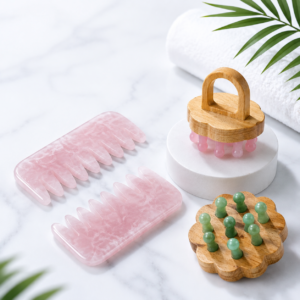
If you want something more satisfying than fingers, the Rootli Stone Comb – Scalp Gua Sha was designed for exactly this: a five-minute, gua sha-inspired scalp massage that doubles as pre-serum prep. Use it on dry hair before you shower, or on damp hair with a little product to help it glide.
Step 3: Layer a lightweight serum where it counts
Here’s the part most people skip entirely. A scalp that feels tight is usually asking for moisture, and the easiest way to deliver it is a lightweight, non-greasy serum applied directly to the scalp rather than the hair. Part your hair in a few sections, dot the serum along the scalp, then massage it in with your fingertips.
Rootli Serum is made for daily scalp care — light enough that it disappears into the roots instead of weighing hair down. A few drops at night, or right after washing, is plenty. If your scalp is reactive, start with less and build up.
Step 4: Add one weekly warm ritual
Once a week, give your scalp twenty minutes of warmth. Warmth helps you slow down, and it makes whatever you’ve applied feel more comfortable and more intentional. The Rootli Cap turns that into a simple weekly warm scalp spa ritual you can do while reading, answering emails, or watching something you’ve already seen twice.
That’s the whole routine: gentler washing, two minutes of massage, a serum, and one warm session a week. It sounds almost too simple, which is exactly why it works.
Everyday Habits That Keep a Flaky-Feeling Scalp Calm
Between washes, a few small choices make a surprising difference to how comfortable your scalp feels by the end of the day.
- Loosen your hairstyles. A tight ponytail or slicked-back bun pulls on the scalp for hours and can leave it feeling sore and irritated by evening. Alternate with looser styles, and let your hair down when you get home.
- Let your scalp breathe after workouts. Sweat left sitting under a hat or a snug headband is a common trigger for itchiness. A quick rinse or a gentle refresh helps more than you’d expect.
- Go easy on dry shampoo. It’s brilliant for stretching a wash day, but layering it for several days in a row can leave a film that looks a lot like flaking. Use it once, then wash.
- Keep heat tools moving near your roots. Hold the dryer a few inches away, keep it in motion, and finish with a cool shot instead of blasting one spot.
- Hydrate your environment. Indoor heating and air conditioning pull moisture out of the air and out of your skin. A humidifier in the bedroom is a quiet game-changer in winter.
- Try not to scratch. It’s the hardest habit to break and the one that keeps irritation going. When the urge hits, massage instead — same motion, much kinder.
If you wear hats often, look for breathable fabrics and give your scalp a break at the end of the day. A comfortable scalp makes everything else feel easier.
Choosing Tools for a Dry, Sensitive-Feeling Scalp
Tools are optional, but the right ones make a routine feel less like maintenance and more like a ritual — and rituals are the ones you actually keep. Consistency is the only thing that really moves the needle here.
If your scalp feels reactive, start soft. The Natural Ritual Set is built around gentle, tactile scalp care — the kind of set you use slowly rather than aggressively. It’s a lovely first step if you’re not sure yet what your scalp likes.
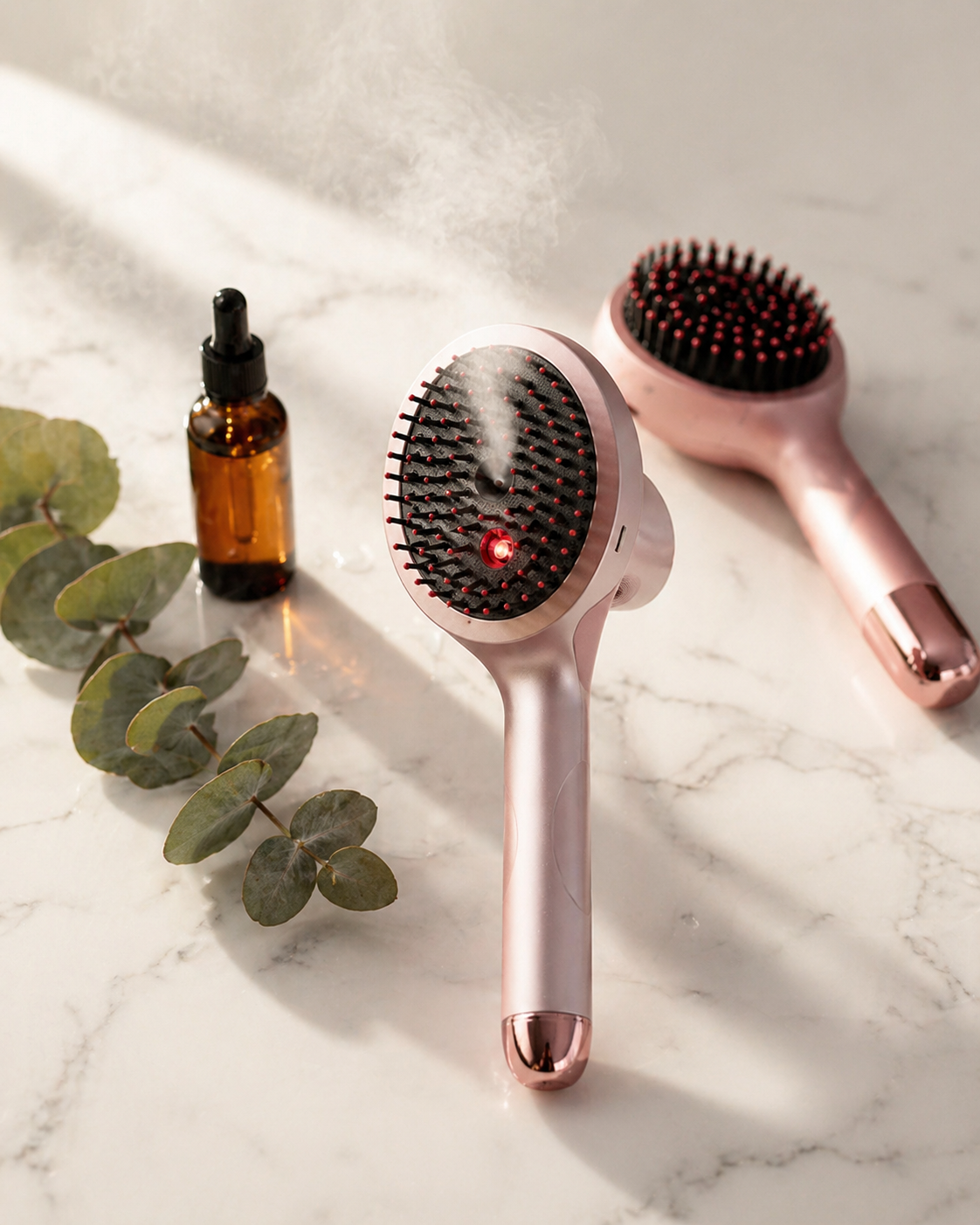
If you’d rather understand your scalp before committing to a routine, The Rootli Diagnostic Pro helps you get a clearer picture of what you’re working with, so you can choose products that match. And if you like the idea of combining massage with light-based care, the Rootli Glow Comb Dual-Light Scalp Brush is designed for daily scalp brushing with dual-light therapy.
For even, hands-free application, the Rootli Infuser – Nano Mist Scalp Device delivers fine nano mist coverage across the scalp, which is helpful when you want product distributed without soaking your roots.
Where to Start If Your Scalp Feels Tight Today
Start smaller than you think you need to. Tonight, skip the hot shower, massage your scalp for two minutes, and apply a few drops of serum before bed. Tomorrow, loosen your hairstyle and drink an extra glass of water. Next week, add one warm ritual and see how your scalp feels on day seven.
Give it two to four weeks. Comfort usually shows up first — less tightness after washing, less itchiness by evening, fewer flakes on dark clothing. Healthy-looking hair tends to follow, because hair looks its best when the scalp underneath it feels balanced and calm.
Your scalp has been waiting for the same attention you give your face. Choosing The Natural Ritual Set or a single bottle of Rootli Serum is a gentle, low-pressure place to begin — and honestly, the two minutes of massage are the part you’ll look forward to most.