�� Scalp Science | Hair Health | 2026 World Cup
As 48 nations battle the 2026 World Cup heat this summer, sports scientists are spotting a quieter epidemic in the locker room: stress-triggered hair loss. Here’s what the data says — and what you can do about it.
The World Cup’s Unexpected Subplot: Hair Loss Under the Spotlight
When the 2026 FIFA World Cup kicked off across the United States, Canada, and Mexico this June, billions of viewers locked onto every dribble, tackle, and goal. But inside the locker rooms of some of the world’s greatest athletes, a less-discussed drama was quietly playing out. Dermatologists working with national squads have long noted that tournament periods — intense training loads, extreme heat, disrupted sleep, travel stress, dietary changes — are among the most powerful triggers for temporary hair loss, clinically known as telogen effluvium.
It turns out the scalp is a surprisingly accurate barometer of overall physiological stress. And what’s true for elite players training in 95°F Kansas City heat is equally true for millions of everyday people navigating high-pressure routines.
What Actually Happens to Your Scalp Under Stress
The human scalp contains approximately 100,000 hair follicles. Each follicle cycles through three main phases: anagen (active growth, lasting 2–7 years), catagen (brief transition), and telogen (resting, followed by shedding). Under normal conditions, roughly 85–90% of follicles are in the anagen phase at any given time.
When the body encounters significant physiological stress — physical exertion, heat exposure, nutritional depletion, or psychological pressure — it can push an abnormal number of follicles into the telogen phase simultaneously. The result is diffuse shedding that typically appears 6–12 weeks after the triggering event. For a World Cup athlete, that means shedding peaks just as the trophy is being lifted. For the rest of us, that means the hair you’re losing in September may actually trace back to a brutal June.
Key stat: Studies suggest that chronic scalp inflammation — often invisible to the naked eye — can reduce follicle density by up to 30% before any visible thinning appears.
The Role of Scalp Circulation: What’s Actually Going On at the Root
One of the most underappreciated factors in hair health is microcirculation — the flow of blood through the tiny capillary networks that supply each follicle with oxygen and nutrients. Poor scalp circulation doesn’t just slow hair growth; it creates the conditions for follicle miniaturization, the gradual shrinkage of follicles over time that precedes visible hair loss.
Low-level light therapy (LLLT), also known as photobiomodulation, has emerged as one of the most clinically studied non-pharmaceutical approaches to improving scalp microcirculation. A 2023 meta-analysis published in the Journal of Cosmetic Dermatology, reviewing 11 randomized controlled trials, found statistically significant improvements in hair count density among participants using red and near-infrared light devices (wavelengths 630–670nm) over 16–24 weeks.
The mechanism involves light photons being absorbed by cytochrome c oxidase in the mitochondria of follicle cells, stimulating ATP production, reducing oxidative stress, and promoting cellular proliferation in the dermal papilla — the specialized cluster of cells that essentially “program” each hair follicle.
Scalp Imaging: The Diagnostic Revolution You Haven’t Heard Of
Here’s what’s changed in the last five years: scalp care has become visual and data-driven. Where previous generations were left to guess at the health of their follicles, high-resolution digital dermoscopy devices now allow individuals to see their scalp at 50–200x magnification — identifying sebum buildup, follicle miniaturization, inflammatory scaling, and vascular changes in real time.
Dermatologists have used clinical trichoscopy for years. What’s new is that consumer-grade versions of this technology now exist with WiFi-connected app ecosystems that allow users to track scalp changes over time, creating their own longitudinal photo record.
This matters because hair loss is slow and gradual — and most people only notice when 30–40% of density has already been lost. Starting to image and track your scalp before obvious symptoms appear is analogous to getting regular cholesterol checks before a cardiac event. Prevention is always less expensive than treatment.
The Rootli Scope uses 200x magnification with WiFi app connectivity, letting you document follicle-level changes over your entire hair care journey — the same observational logic dermatologists apply clinically.
The Sweat-Sebum-Inflammation Loop: Why Athletes Are Especially Vulnerable
Athletes sweating through grueling summer training sessions create a specific scalp environment that most people never experience at that intensity — but that casual exercisers encounter in milder form every time they work out in heat.
Sweat, when it mixes with sebum and sits on the skin for extended periods, creates a film that can block follicular openings and create a low-grade inflammatory microenvironment. Research into follicular plugging suggests this cycle — heavy sweating, inadequate cleansing, sebum buildup, inflammation — is a significant and underrecognized contributor to reactive hair shedding.
The solution isn’t simply washing your hair more often (over-washing disrupts the scalp’s acid mantle). It’s targeted, tool-assisted scalp care that reaches the follicular level rather than just cleaning the hair shaft.
What the Evidence Says About Serums — And How Delivery Method Changes Everything
The scalp serum market has exploded in recent years, with biotin, caffeine, niacinamide, peptides, and botanical extracts all claiming follicle-stimulating properties. But an under-discussed finding from cosmeceutical research is that the vehicle and delivery method often matter as much as the active ingredient itself.
Studies on topical delivery to the hair follicle consistently show that follicular penetration is significantly enhanced by application methods that facilitate contact with the follicular ostium rather than distributing product across the hair shaft. Nano-particle or nano-mist delivery systems, which generate droplets small enough to interact with the follicular channel, show superior penetration compared to traditional fingertip application.
In other words: the expensive serum you’ve been patting onto your scalp with your fingertips is probably not reaching its destination at the concentration you think it is.
Building a Science-Based Scalp Routine in 2026
Based on the current evidence base, here’s what a comprehensive, research-aligned scalp care routine looks like:
1. ASSESS. Use a high-magnification imaging device to establish a baseline. Photograph the same zones (crown, hairline, temples, parting) under consistent lighting every 4–6 weeks.
2. CIRCULATE. Mechanical stimulation through scalp massage or gua sha tools has been shown in small but consistent studies to increase dermal papilla gene expression associated with hair thickness. A 2016 Japanese study found 4 minutes of daily standardized scalp massage produced measurable increases in hair shaft thickness after 24 weeks.
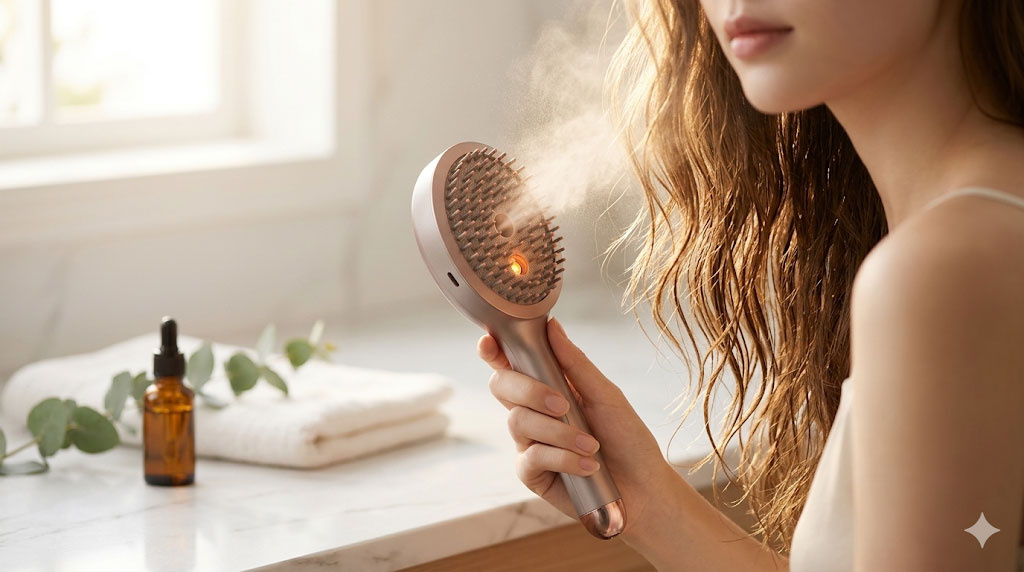
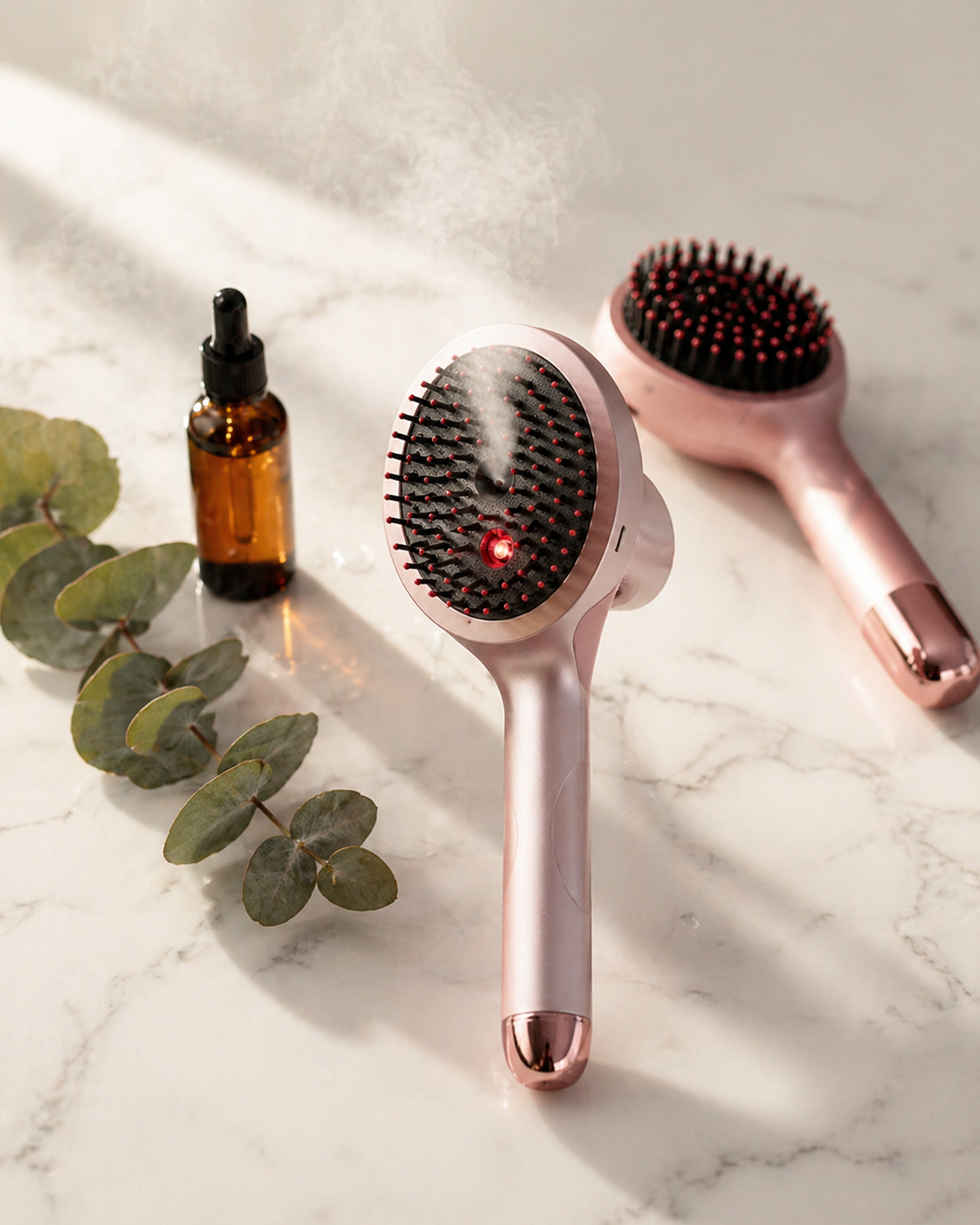
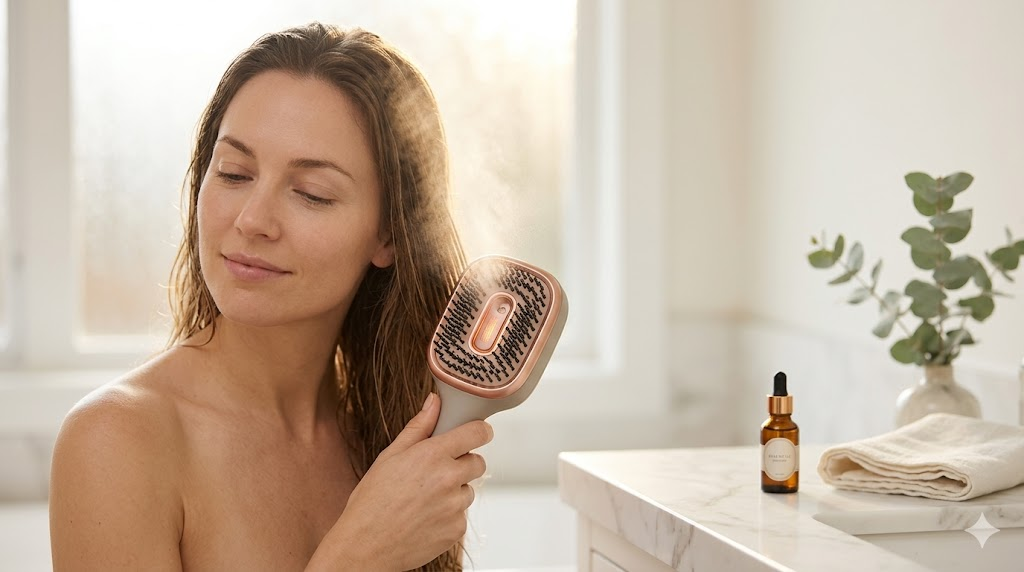
3. DELIVER. Use a precision delivery device — whether a nano-mist infuser or a rolling-ball serum comb — to ensure active ingredients reach the scalp surface rather than the hair shaft.
4. STIMULATE. Low-level light therapy for 15–20 minutes daily or every other day, focusing on the areas showing the most follicle miniaturization in your imaging baseline.
5. RESTORE. For damaged hair fiber, steam conditioning with an occluded heat cap allows deep conditioning masks to penetrate the cuticle far more effectively than cold application.
The Takeaway: Your Scalp Is a Health Dashboard
The athletes competing under blazing skies this World Cup summer are a dramatic illustration of a universal truth: the scalp is not a passive surface. It’s a dynamic biological environment that responds to stress, nutrition, circulation, inflammation, and care with precision.
The good news is that the same scientific advances that allow team physicians to monitor player scalp health now exist in consumer form. The gap between clinical dermatology and accessible home care has never been smaller.
Whether you’re watching the World Cup from your couch or playing five-a-side on Saturday morning, your scalp is keeping score. The question is whether you’re checking the board.