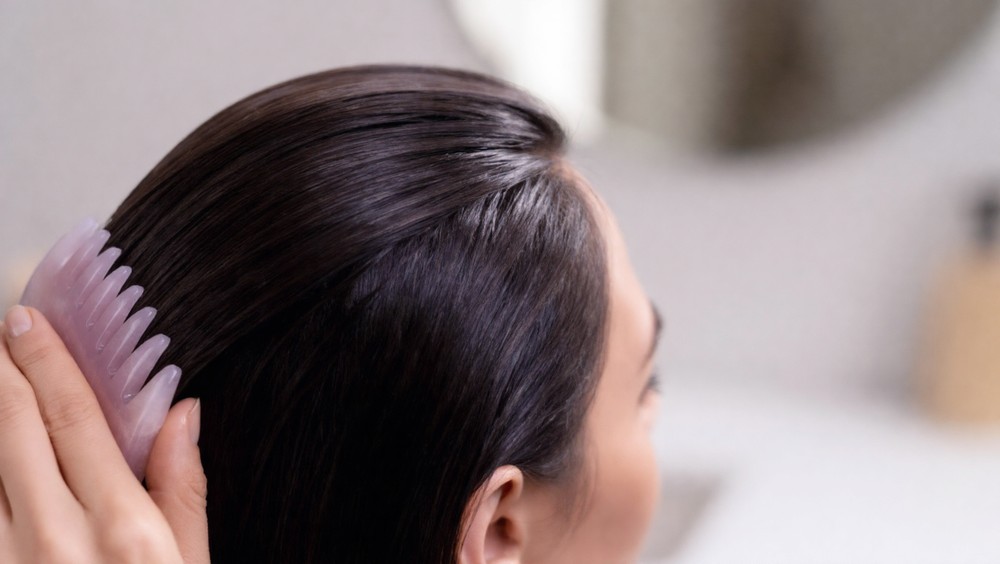
Scalp massage used to be a salon indulgence — ten blissful minutes at the shampoo bowl before the real appointment began. Lately it has moved to the center of the conversation, showing up in morning routines and on bathroom counters right next to skincare. Somewhere along the way, we stopped treating the scalp as an afterthought to the hair and started treating it like skin that deserves attention.
That’s why scalp massage, gua sha, and circulation-focused rituals fit so naturally into modern hair care. They’re gentle, low-effort, and deeply comforting — the kind of habit that survives a busy week. Here’s how to think about them, what they can realistically do for the look and feel of your hair, and how to build a ritual you’ll actually look forward to.
Why scalp massage became the most quietly powerful step in hair care
Hair care has spent decades focused on the ends: masks, oils, bond-builders, heat protection. The scalp, meanwhile, got shampoo and a quick scrub. But healthy-looking hair starts at the root, and the scalp is living tissue with its own needs — comfort, movement, and a little stimulation now and then. Scalp massage is the simplest way to give it all three.
There’s a reason it feels so good. The scalp holds a dense network of nerve endings and tiny blood vessels, and slow, deliberate pressure sends a signal that everything is fine. That’s why a two-minute massage can feel like a reset button for your whole body, not just your head.
It’s worth being honest about what massage can and can’t do. It won’t change your hair’s genetics, and no tool can promise a specific result. What it can do is make your scalp feel comfortable and cared for, support scalp health over time, and turn a forgettable step into something you look forward to. That’s a real benefit — just not a dramatic one, and that’s exactly the point.
What a good scalp massage actually feels like
It should never be a scratch. Think of your fingertips as soft, slow paddles rather than claws, moving in small circles with steady pressure. You’re not trying to scrub the scalp clean or dig into the hairline — you’re waking it up. If your shoulders drop and your jaw unclenches, you’re doing it right.
- Slow beats fast. Small circles at the pace you’d use to massage your temples.
- Pressure, not friction. Move the scalp over the bone instead of dragging the skin.
- Cover the whole map. Hairline, temples, crown, sides, and the base of the skull.
- Two to five minutes. Consistency matters far more than duration.
Shop the scalp ritual
-
Sale!
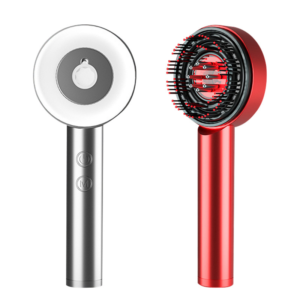
Rootli Serum Comb Serum-Infusing Scalp Massage Brush
Original price was: $198.00.$178.00Current price is: $178.00. Select options This product has multiple variants. The options may be chosen on the product page -
Gua sha for the scalp: five minutes your hairline will notice
Gua sha moved from cheekbones to the hairline for a simple reason: it does something fingers can’t. A smooth stone or comb edge gives you a wider, more even surface, so you can glide along the scalp in long strokes instead of small circles. It’s the same idea as facial gua sha — gentle, sweeping movement that feels wonderful and leaves the area looking and feeling refreshed.
On the scalp, that translates into a ritual that’s part massage, part prep. Many people use a stone comb before applying serum, since the sweeping motion helps distribute product evenly instead of dumping it in one spot. Others reach for it on dry hair as a way to decompress after work. Both are perfectly valid, and both take about five minutes.
A Rootli Stone Comb – Scalp Gua Sha is a lovely starting point if you want that classic stone feel, while the Root Sculptor Premium Pink Scalp Comb – Gua Sha Massager adds a slightly more sculpted edge for anyone who prefers a firmer stroke.
How to work a scalp gua sha into your routine
Start at the hairline and work back, letting the tool do the work. Keep the pressure light — you want a gentle glide, not a deep press. Use short strokes along the sides and longer sweeps over the crown, then finish with a few passes down the neck. If you’re using it with serum, apply a small amount first so the tool moves smoothly instead of tugging.
- Sweep from the forehead hairline back toward the crown.
- Work each side of the head separately, temple to nape.
- Finish with downward strokes along the back of the neck.
- Keep it to about five minutes; more isn’t better here.
- Clean your tool after each use — it touches skin and product.
Building a circulation-focused routine that survives a busy week
The best scalp ritual is the one you’ll repeat. Instead of adding a fifteen-step routine, attach scalp massage to something you already do: while your conditioner sits, while you scroll before bed, while you wait for your coffee. That way it becomes a habit rather than another task on a list.
Morning: two minutes, dry, no tools
Before you style, use your fingertips to wake up the scalp. Small circles from the hairline to the crown, then a few passes behind the ears. This is also a good moment to notice how your scalp feels — comfortable, tight, dry, or a little oily. That awareness is genuinely useful when you’re deciding what to use later.
Evening: five minutes with a serum and a tool
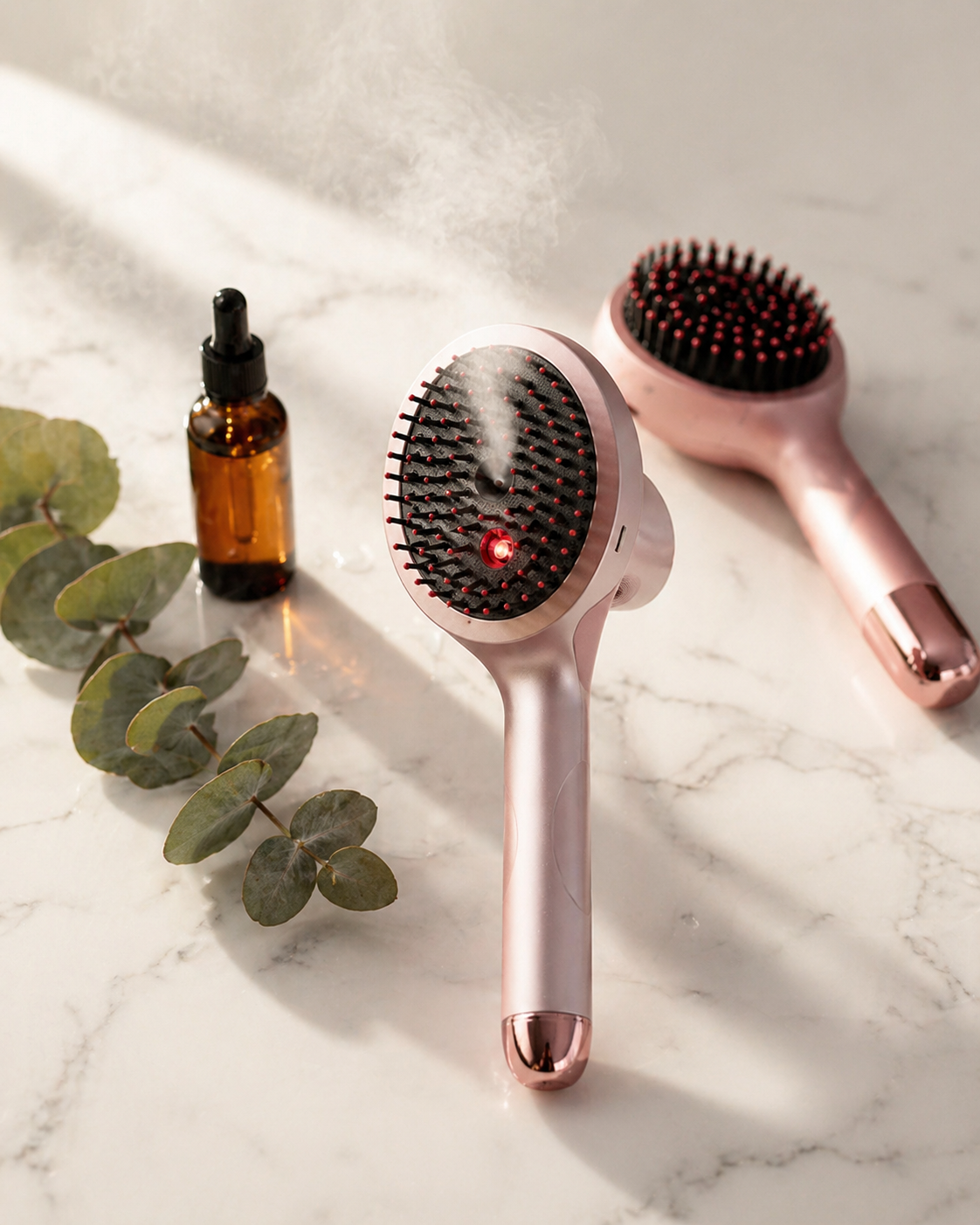
Evenings are made for the longer version. Part your hair in a few sections, apply a lightweight scalp serum, and work it in with a massaging tool. The Rootli Serum Comb Serum-Infusing Scalp Massage Brush is designed for exactly this — massaging the scalp while helping distribute serum through the roots rather than leaving it in one place. Follow with a few slow strokes from a stone comb if you want the extra moment of calm.
For a serum that layers easily into a nightly ritual, Rootli Serum is light enough for daily use and pairs nicely with any massaging tool.
When your week gets chaotic, keep the ritual rather than the routine. A sixty-second fingertip massage in the car or at your desk still counts. The goal is a scalp that feels balanced and comfortable, and that feeling builds from small, repeatable moments.
Choosing scalp tools without overbuying your bathroom shelf
There are more scalp tools than ever, and they all promise something slightly different. The honest approach is to start with one thing you’ll use daily, then add a second only when you notice yourself wanting it. Most people land on a simple combination: something for massage, and something for product application.
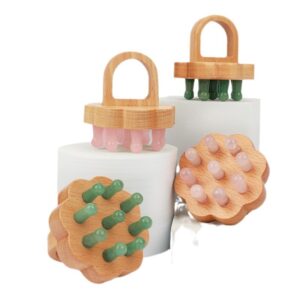
If you want vibration and mist application in one step, the Mist Hair Comb: Vibrating Scalp Massager covers both. If you like a more tech-forward ritual, the Rootli Wand Pro 4-in-1 Smart Beauty & Scalp brings red light, EMS, massage, and serum-assisted application into a single tool. And if you’d rather begin with a curated set than pick pieces one by one, the Natural Ritual Set is a gentle, tactile place to start.
For weekly warmth — the kind that makes a Sunday evening feel like a spa — the Rootli Cap turns a massage session into a slow, cozy treatment. None of these are essentials, and none of them need to be rushed into. A tool you genuinely enjoy using twice a week will always beat an expensive one that sits in a drawer.
Start with five minutes and see how it feels
Scalp massage, gua sha, and circulation-focused rituals aren’t magic, and they aren’t a replacement for a routine that suits your hair. What they offer is simpler and more sustainable: a few minutes of deliberate, gentle attention to the skin you usually ignore. In return, you get a scalp that feels comfortable and balanced, and hair that looks healthier and glossier over time.
Pick one moment in your week — Sunday night, right before bed, or the ten minutes after a shower — and give it five minutes. That’s it. If you’re not sure where to begin, the Rootli Stone Comb – Scalp Gua Sha and the Rootli Serum Comb Serum-Infusing Scalp Massage Brush are the two tools that make the ritual feel effortless from day one.