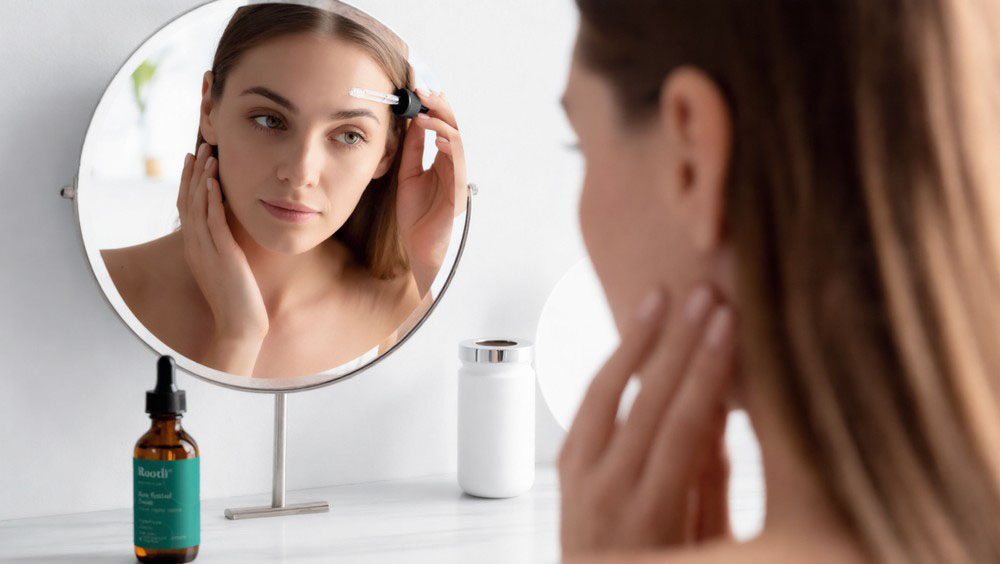
A dry, tight, or flaky-feeling scalp rarely announces itself. It shows up as a faint itch at 3 p.m., a tightness that lingers after you shower, or tiny flakes on a dark sweater. Most of us were taught to treat the scalp as an afterthought — something to shampoo and move past — so it’s easy to ignore until it becomes genuinely distracting. Here’s the reassuring part: a dry flaky scalp routine doesn’t need to be complicated, clinical, or fear-based. It needs to be gentle, consistent, and honestly a little bit enjoyable.
Think about it the way you think about your face. Nobody scrubs their cheeks with hot water and calls it self-care. The scalp is skin too — thinner in places, densely covered in follicles, and mostly hidden under hair, but skin all the same. When it feels dry or tight, the answer is usually not a harsher product or a more aggressive scrub. It’s moisture, movement, and a calmer approach. That’s the whole idea behind scalp-first care, and it’s what we’re building together below.
Why a Dry, Flaky Scalp Routine Should Start With Comfort, Not Control
When flakes appear, the instinct is to go stronger. A clarifying shampoo. A gritty scrub. A brush you attack your roots with. But if your scalp already feels dry and tight, that intensity can leave it feeling more stripped and uncomfortable than before. Harsh is not the same as helpful.
Gentle doesn’t mean ineffective, either. It means working with your scalp’s natural rhythm instead of against it: keeping water temperature moderate, choosing formulas that feel cushioning rather than squeaky, and giving your scalp regular, low-pressure movement so it feels comfortable and cared for.
What “dry,” “tight,” and “flaky-feeling” can actually mean
These words describe sensations, and sensations have more than one possible source. That’s exactly why the routine below focuses on comfort rather than diagnosis.
- Dry-feeling: often about moisture balance — cold weather, hot showers, frequent washing, or products that leave the scalp feeling stripped.
- Tight-feeling: that pulled, tense sensation, sometimes linked to dryness, sometimes to tension in the muscles around your hairline and neck.
- Flaky-feeling: visible or felt flakes can come from dryness, product buildup, or simply from skin renewing itself at its own pace.
One important note: if your scalp is persistently painful, inflamed, intensely itchy, or you’re noticing sudden changes in your hair, please see a dermatologist or healthcare provider. This article is about everyday comfort and beauty rituals — not about diagnosing or treating any condition.
Shop the scalp ritual
-
-
Sale!
Rootli Serum Comb Serum-Infusing Scalp Massage Brush
Original price was: $198.00.$178.00Current price is: $178.00. Select options This product has multiple variants. The options may be chosen on the product page
Your Dry Flaky Scalp Routine, Step by Step
A good scalp routine is short. Four steps, done consistently, will always beat a ten-step routine you abandon after a week. Here’s how a comfortable wash-day sequence can look.
Step 1: Loosen buildup with a gentle dry pass
Before water touches your hair, spend a minute or two moving a tool lightly across your scalp. Dry, soft pressure helps lift product residue and loose flakes so your cleanse can do its job without you needing to scrub harder. A Rootli Stone Comb – Scalp Gua Sha is made for exactly this: slow, sweeping strokes from hairline to crown, no pressure, no scratching. It also happens to feel lovely — like a two-minute reset for your whole head.
Step 2: Cleanse with lukewarm water and low pressure
Hot water feels great in the moment and less great afterward. Turn the temperature down to lukewarm, focus shampoo on the scalp rather than the lengths, and use your fingertips instead of your nails. If your scalp tends toward dryness, you may find you only need to cleanse the scalp area a few times a week, refreshing the roots with water in between.
Step 3: Apply serum to a slightly damp scalp
This is the step most people skip, and it’s the one that makes the biggest difference to how comfortable your scalp feels day to day. After towel-drying gently, apply a lightweight formula directly along your part lines. A Rootli Serum is designed for daily use — light enough to disappear into the scalp, rich enough to leave it feeling soft rather than tight.
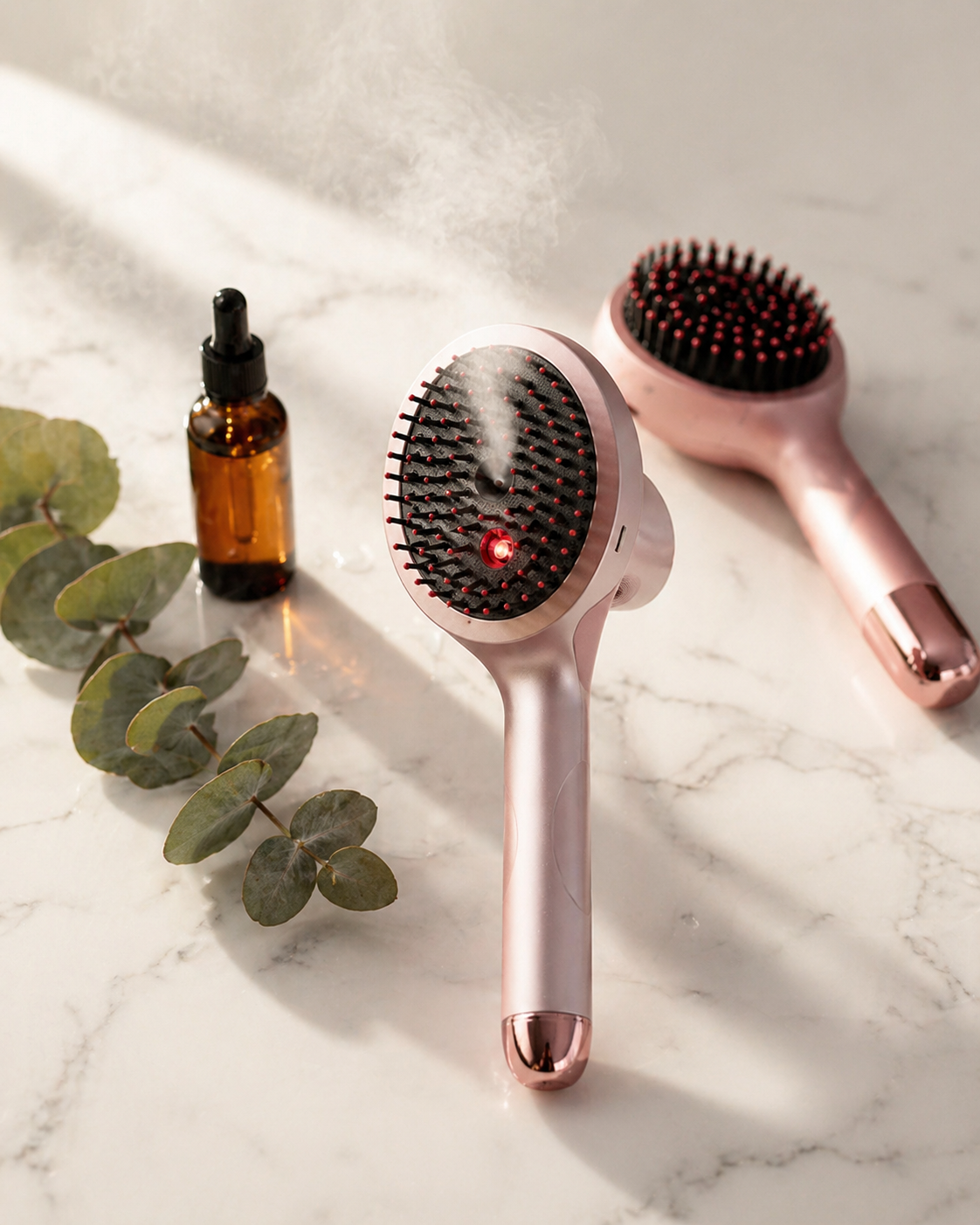
Then distribute it. A Rootli Serum Comb Serum-Infusing Scalp Massage Brush lets you massage and spread serum in the same motion, so you’re not leaving product pooled in one spot or wasting it on your hair. It’s one of those small tools that quietly upgrades the entire ritual.
Step 4: Make massage the main event
Massage is where a scalp routine stops feeling like maintenance and starts feeling like a treat. Two to five minutes of slow circular pressure along the hairline, temples, and crown helps your scalp feel looser, more mobile, and more comfortable. Do it with clean fingertips, a comb, or a vibrating tool — whatever you’ll actually reach for.
- Keep pressure light; you’re coaxing, not kneading dough.
- Work in small circles, then move to the next section.
- Finish with a few slow strokes down the neck to release tension.
Weekly Rituals and Small Habits That Keep a Tight Scalp Feeling Balanced
Daily steps handle the basics. A weekly ritual handles the rest — the part that makes scalp care feel like something you look forward to rather than something you should do.
A five-minute warm reset
Once a week, treat your scalp to warmth and stillness. A Rootli Cap creates a warm, spa-like moment at home, and it pairs beautifully with pre-serum massage. Apply serum first, then let the warmth do its thing while you answer emails or watch something. If you’d rather keep it tactile, The Natural Ritual Set gathers gentle, hands-on tools for a slower, more intentional session.
Mist, light, and everything in between
If your scalp tends to feel dry and tight, hydration-focused tools are worth exploring. A Rootli Infuser – Nano Mist Scalp Device delivers fine, even mist across the scalp, which is a nice way to refresh roots between washes without soaking your hair. For those who enjoy light-based beauty tech, a Rootli Pulse Pro – LED Light Cap offers hands-free red and blue light care as part of a weekly routine.
And between wash days, a few small habits go a long way:
- Swap tight, high ponytails for looser styles a few days a week.
- Rinse thoroughly — leftover product can leave the scalp feeling coated and uncomfortable.
- Change your pillowcase regularly and let your hair dry fully at the roots.
- Keep a lightweight serum or mist handy for the afternoons your scalp feels tight.
Building a Scalp Routine You’ll Actually Keep
The best dry flaky scalp routine is the one that fits into your real life — the one you can do in five minutes on a Sunday night, not the one that requires a free afternoon. Start with the two steps that matter most: a gentle cleanse and a serum-and-massage moment. Add a weekly warm ritual when you’re ready. Notice how your scalp feels, adjust, and don’t chase perfection.
If you’re not sure where to begin, The Rootli Serum Lab is a lovely starting point for serum-led scalp nourishment, and The Glow Detection Set helps you check in on your scalp’s condition before you commit to a routine. Whatever you choose, keep it kind, keep it consistent, and treat your scalp like the skin it is. It’ll feel better for it.